Author: That Cluckin' Bustard

Lost in Savernake Forest

‘I’m not sure I really like this forest,’ my girlfriend said to me as we walked along a small path. ‘It’s not really thick enough, it doesn’t feel particularly adventurous.’ About 30 feet further on whatever track it was that we’d been following had all but disappeared and we were wrestling our way through brambles and holly bushes in an attempt to plough through the undergrowth of Savernake Forest.

This Ancient Woodland provided the perfect excuse for us to get off the sofa for a Sunday morning walk. The sky was blue and the sun was out but there was sharpness in the air that betrayed the turning of the season, summer was unmistakably taking its leave and ushering in the brown leaves and blackberries of autumn.

Parking can be found at the Postern Hill picnic site, overlooking Marlborough, on the boundary of one of the forest’s so-called ‘distinct areas’. From here we set off unguided and largely uninformed on our walk (maps are available from the shop at the camp site, we just chose ignorance) with nothing more than a vague notion of heading off somewhere into there trees.

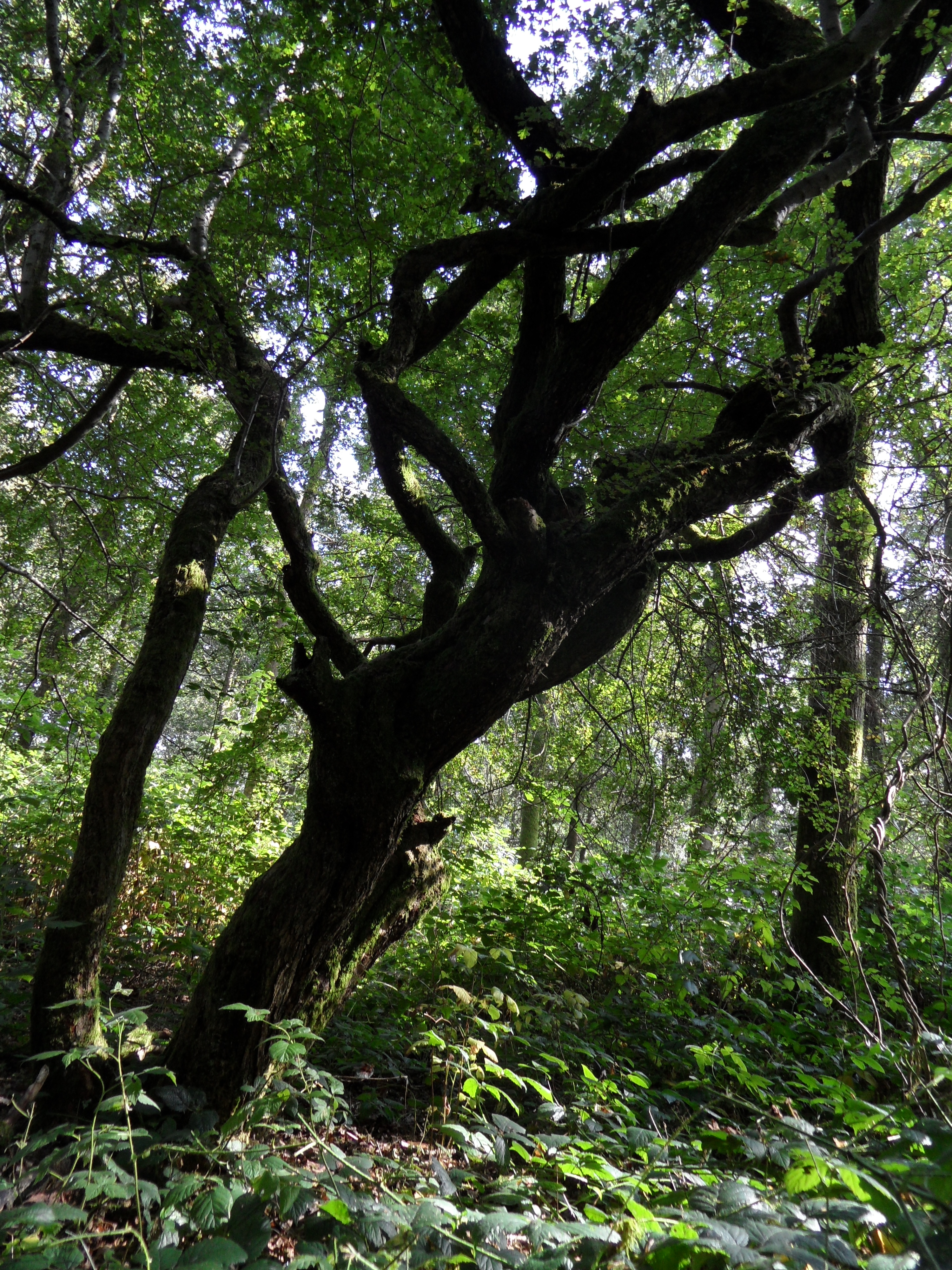
The picnic site itself was relatively open and filled with families eating, barbecuing and playing. As well as parents and children this spot is evidently a hit with dog walkers and cyclists and there are four tracks for them to enjoy in this region of the woodland, but we chose to follow none of these and blazed our own trail into the forest instead. We found what must have been a deer track and followed it, constantly having to untangle ourselves from the thorns of overhanging brambles as we ventured further and further from any other living being.

SAM_0694

Of course our isolation did add something to the experience and it was nice to enjoy some of the more beautiful but less visited areas of the forest, but it wasn’t an easy trek. Every time we came to a small clearing we looked around in the hope of finding a recognisable path, only to find ourselves forced to carry on without.

Away from the provided tracks the forest is largely unmanaged. Fallen trees are left to decay to provide habitat for invertebrates, while dead standing trees tend to be left where they are. The overall effect is that Savernake remains as natural as possible, much as it would have been when Saxon kings wrote of it in AD 934. One downside to this, though, was the particularly disappointing point where beer cans and drinks bottles had been left lying around, but considering the size of the area there was surprisingly little litter.
SAM_0693

After about half an hour of trekking the trees up ahead began to thin. Peering through the edge I could see an open field, at the far end of which was something large and white. I looked closer, it was a sightscreen: without having any idea where we were going, we’d wandered all the way across to Marlborough Cricket Club. Never mind though, we might have ventured way off course but at least we’d finally re-connected with civilisation. Except we hadn’t. Civilisation teased us, sitting tantalisingly close but the forest was determined not release us. No matter where we tried, any semblance of a path had finally disappeared and we could do no more than gaze abjectly at the neatly mown verges just a matter of feet away, denied access to them by undergrowth that would have needed a machete to pass through.

Resigned to defeat with freedom at our fingertips, we turned and tracked back the way we’d come. ‘This definitely isn’t a walk to do wearing a dress,’ my girlfriend lamented as she unhooked her skirt from yet another bush. As we eventually emerged back out into the clearing of the picnic site we saw a well laid track that cyclists and other walkers were merrily wandering along without a care in the world. Perhaps that would have made a more sensible option, but at least my girlfriend got the ‘adventurous’ forest walk she wanted.

* * *
The Ancient in The Modern World

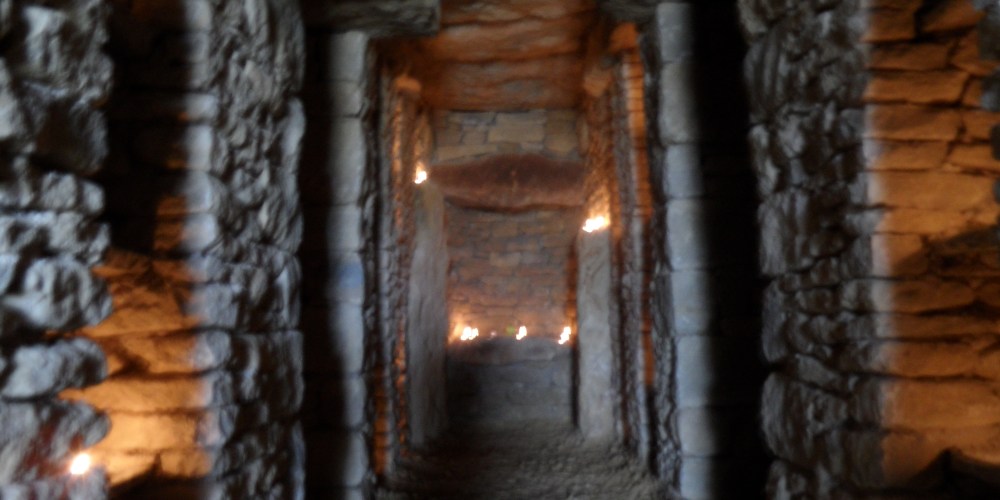
The dark might have been oppressive if weren’t adorned with dozens of tiny flames. Even combined, their meager amber glow could barely penetrate the depths of the stoney chamber, but each one was a point of warmth on the thick black canvas. So far the tomb only housed one person’s remains, but over the coming years that numbers is to grow into the hundreds.

A few weeks ago my girlfriend and I visited the West Kennet Long Barrow, one of the oldest existing buildings on the entire planet. Wiltshire is famous for its links to ancient history, made especially real by the numerous neolithic tombs that still scatter the county and that particular one is the flagship example. But now a local farmer has brought all that bronze age burial business into the www. era by constructing the first long barrow to be built in Britain for four millennia and offering up the plots inside it to anyone with a bit of cash going spare.

The work has been done over the course of 2014 just outside the village of All Cannings, partly using chalk and earth from the construction of a barn at a neighbouring farm and partly using stone imported into the area, including some bluestone of the kind that appears at Stonehenge. After all the effort, today was an open morning to show off the end product to anyone who was interested. ‘Get there quickly,’ we were told. ‘The owner wants to get to the pub.’ Can’t argue with that, so it was on with the boots and a quick scramble across the Kennet & Avon canal to where this 21st century tomb sits inconspicuously in a muddy field.

The entrance to the new long barrow

The entrance to the new long barrow

Even as we walked along the track leading towards the barrow we could hear the chattering voices of a healthy crowd which had converged from far parts of Wiltshire and beyond. On our arrival, a press photo shoot was being carried out in the doorway so we turned to the refreshments table which had, fittingly, been laid out with English Heritage approved mead. Honey-sweet and packing quite a punch, the golden liquid went down smoothly to set us up for an intimate guided tour with the owner’s wife and her small torch.

While on the whole it appears nothing more than a large mound from the outside, there is a front-facing wall made of large stones which houses the entryway. These may not be as grand as the sarson stones which form the threshold to other barrows, but their effect is still impressive. Beyond that is a wrought iron gate leading into a central passageway within.

Suddenly the dark becomes enclosing, and by the weak torchlight we were guided into one of the round chambers which lead off the spine. The entire interior is made from Cotswold dry stone, about the size of a standard brick, piled high from floor to round, spiralling ceiling. Built into the walls are the niches which are to house the urns- either one or an entire family’s worth- each one adorned this morning with a small candle. The weight of the earth overhead insulates completely from all noise and happenings outside.

There is already one lady interred here. Her spot was chosen by serendipity and a rather sweet twist of fate: when the deceased lady’s husband visited the barrow, a butterfly came in, flew straight to that particular shelf and settled there. He knew that had to be the one. The owner, meanwhile, has bagged his spot at the end of the main passageway and marked his territory today with an apple.

A candlelit niche onto which urns will be laid.

A candlelit niche onto which urns will be laid.

The entire construction has been beautifully rendered, truly a testament to both the owner’s vision and the skill of the stone masons. There is a strange, otherworldly feel to the whole place. To say you feel transported to an ancient world would both cloying and misleading, but certainly it induces a feeling of detachment from the modern environment, if only for a few minutes.

We re-entered reality to find ourselves again surrounded by sharp morning light and people planning their walk to the local pub. Being a home for the dead, the long barrow is not just left open for visitors to come and go as they please, but anyone interested in this curious mix of ancient and modern may enter by appointment. For anyone coming to visit the neolithic sites nearby, this offers a wonderfully made point of comparison and is well worth the phone call.

The Tour Comes to Town

It’s not often that top level international sport happens in Wiltshire. The sort of sport which gets national coverage, which even gets put on TV and everything. Thus, when the UK’s answer to the Tour de France- the creatively named Tour of Britain- went from Bath to London on a route that took it right through the centre of this modest sporting county, it seemed like something that I had to see.

Now, I should be honest here. I know absolutely nothing about cycling. I know who the famous riders are, and have just about come to grips with what a ‘peloton’ is, but in reality it is not one of the sports in which I consider myself to have any kind of expertise. Fortunately for me, a lifelong friend of mine and his family are all avid cyclists, and so it was with them at my side that I took up position under the early autumn sun outside The Wiltshire Yeoman pub in the village of Chirton.

We were by no means alone and a small but growing crowd- I’m sure there were enough to be classed as a ‘crowd’- had also seen fit to be outside a pub at five to 11 in the morning rather than actually turning up at work. Many had cycled there themselves and were fully decked out in their lycras, some even wearing replica kits (shirts? strips? The lingo escapes me on this one) of their favourite teams. I had no idea people really ‘supported’ teams in the cycling world; I was learning already.

There was some debate happening among the various groups about which side of the road offered the best sightlines. Gareth, my friend’s dad, adopted a trial position on the far side next to a photographer, but the head of this insatiably sociable household had ideas beyond simple reconnaissance. Glancing across to his neighbour, he crossed his arms, gave an upward nod and made his move: ‘We’ve been to a couple of these in France,’ he dropped casually, a knowing look appearing on his face. A classic manoeuvre; the bait was laid. The photographer lowered his camera and looked back at him: ‘Oh yeah?’ he replied, his interest piqued. Bait taken.

We had been there a good half an hour by this stage and people began getting their phones out to check the live commentary and make estimates regarding the athletes’ arrival times. Team cars had begun passing us by and the occasional outriding motorbike. Still the road hadn’t been closed though, bizarrely leaving motorists free to cruise headlong towards the incoming racers.

Who was in the lead, some people queried. Others were more excited by the police motorbikes, while others still found interest in their pint glasses. Our group was getting into tactics, who would be well suited to the climb into Devizes and then the sprint out. It wasn’t a section that would suit Mark Cavendish, they decided, before coming to the conclusion that he ‘wasn’t very good at riding a bike’; a damning indictment of a champion cyclist if ever I heard one, but one that was backed up by his developing habit of falling off and crashing. They said it was because he was a good sprinter but didn’t have the downhill background of many others, so was liable to lose control when things got tricky. I accepted this wisdom, knowing no better. Across the road, meanwhile, Gareth and his new photographer friend were now deep in conversation.

By about half past 11 things started to happen. More and more motorbikes began to appear from the west, forming a ‘rolling roadblock’ to prevent any inflowing cars from pulling out of their junctions. But from the east a problem was bumbling into view. A lone bike rider, like a lycra-clad Pied Piper, was leading the motliest of convoys down the road towards the race: bouncing along behind him were two enormous tractors with even larger mud-covered attachments, then a van, some cars. Many cars, in fact, stretching back quite some way, all stuck behind the farm traffic with the racers now mere seconds away.

Now I have never actually been to the Tour de France, but I don’t imagine muck spreaders often cause a flurry of panic on the Champs-Elysees. The two tractors were immediately surrounded by police motorbikes and guided down the junction to the safety of the village. A further four motorbikes formed a wall across the road and frantically waved every other vehicle into the pub car park while a few spectators shouted for them to move. The drivers, meanwhile, clearly not expecting to encounter all this on their commute, all looked utterly bemused. One stopped in the entrance of the car park, wound down his window and entered into a discussion with a policeman about what was happening, blocking everyone behind him. ‘GET OUT THE BLOODY WAY!’ yelled furious onlookers. The racers were bearing down on us, we had no time to indulge their confusion.

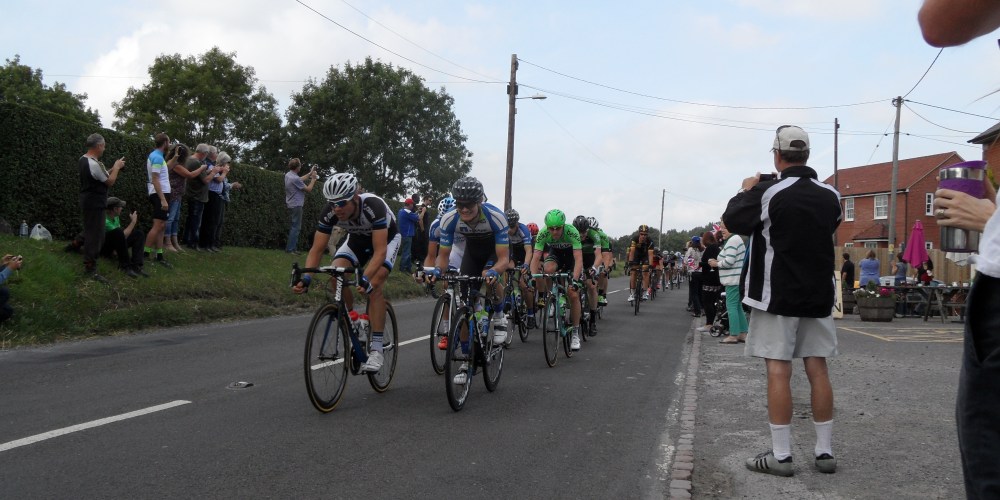
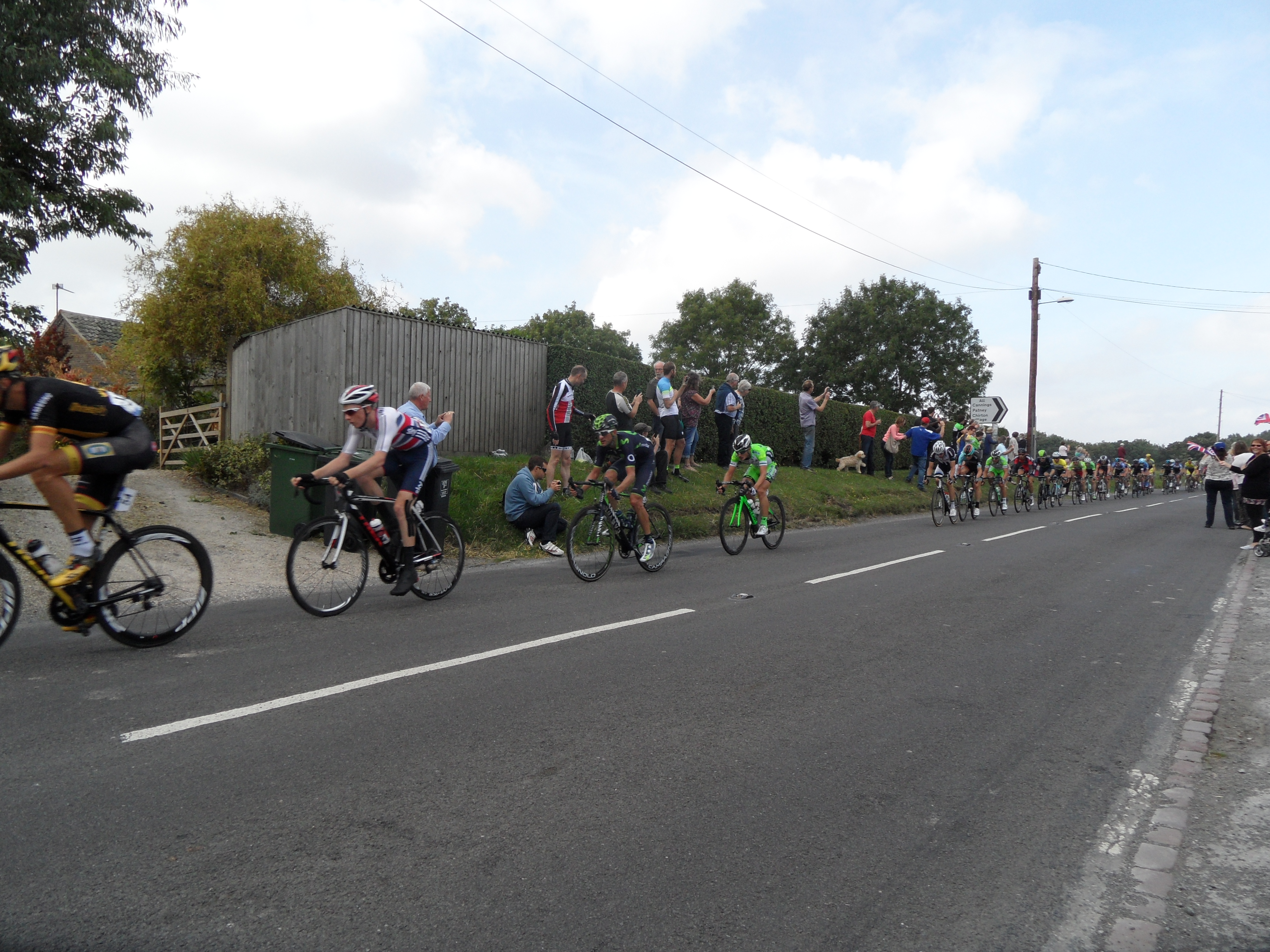
Finally the road was cleared and moments later the cyclists appeared. The leaders sped towards us as the crowd began to clap and whoop. A group of children from the village primary school waved home made Union Jacks, cheering excitedly. At the back of the peloton (See? I told you) was Bradley Wiggins, leaning into the window of a support car and chatting away, looking for all the world like a man idling in a coffee shop rather than peddling a bike at 30ish mph. ‘Go on Wiggo!’ shouted the supporters, as he breezed along without a care in the world. He probably barely even noticed their presence, but they will all have taken home a memory to cherish.

SAM_0662

In a flash they were gone. A minute or so later the chasing pack came round the corner and flew by at an equally baffling speed. In total we probably watched actual sport for about 30 seconds- if that- but it was the sense of occasion that made it worthwhile, even for a non-fan like me. Like I said, it’s not often that top level sport happens in Wiltshire, so when it does we might as well grab it and make an event of it, something we do not by creating great fanfare but by getting together and just sort of… hanging out. And when that event includes frenzied police riders, angry spectators and bewildered tractor drivers, so much the better. So, Bradley and pals, can we pencil you in for the same time again next year?

Something for the Young’Uns

My 11 month old nephew Harry* is almost drowning in the ball pit, but, desperate as ever to make friends with any and everyone, he fights his way through, arms open wide, towards an unknown three year old girl who happens to be passing through. She regards this approach with a look of sheer terror, something that my grinning nephew completely fails to register, and begins preparations to defend herself; as Harry gets within striking distance she swats an arm and clobbers him around the head before clambering away to safety. Poor Harry looks bemused but maintains his smile, as though not quite sure if the manoeuvre was a success or not, then instantly forgets the whole episode when his mum swoops in to give him a hug instead.

These things happen to the very young, but at the toddler’s paradise of Coral Cove in Devizes there is plenty to help them get over it. For the inexplicably small price of a single pound per person, children are allowed free run of this huge soft play area, spread over three levels with slides, ropes, ball pits and just about everything else I ever dreamed of when I was under 10.

I joined Harry and his mum (my brother’s wife) on a Wednesday morning in the middle of the summer holidays and it was busy enough to enjoy the atmosphere without being overcrowded. Our use was restricted to a small part of what they offer due to his being so young but he still had plenty to keep him occupied.

We took our shoes off, leaving them and our other excess baggage at the seating area supplied for the adults who chose not to get involved in the action. Carrying him into the play area, Harry instantly became very excited and loved climbing on the soft toys, while we were happy to let him relatively ‘off the lead’ (figuratively, my nephew isn’t actually kept on a lead) as there was so much cushioning everywhere that even if he fell there was no chance of him hurting himself.

A couple of runs down the slide later, he was ready for the ball pit. This could either be entered by a hole in the surrounding netting or, the option we chose, down another small slide. His face as he crashed into the balls seemed to suggest that this was without any shadow of a doubt the single greatest thing ever invented and just too much fun to cope with. He threw a few around in his excitement before, fatefully, the above mentioned older girl flew down the slide and caught his eye.

It transpired that she was the granddaughter of David, a man I play cricket with. After watching the childrens’ tete-a-tete with the amusement that adults invariably find in these things, David took the girls away to the more advanced part of the play area, leaving us to the balls and Harry to cast the odd furtive glance towards the older children, betraying a hint of jealousy at the extra fun they could have that was beyond his reach.

After about an hour it was time leave. Having put shoes on I heard my name being called from somewhere on the middle level. ‘You can’t leave me here like this!’ David yelled down to me, an expression of pleading desperation writ across his face through netting. From the looks of things he was being swamped by a swirling mass of about 15 highly excitable four year olds. I could offer him little, though, bar some fairly insincere apologies and with them we made a break for the exit. He survived, and on seeing him a few days later he confessed to me that, despite the ordeal, it had been a fantastic way to entertain the children for a morning, to which I could only agree. For anyone needing something to occupy under 10s in Devizes, Coral Cove can’t be recommended highly enough.

*My nephew isn’t really called Harry, I changed that for internet reasons.

Up on the Downs

With the sun casting only sporadic warmth through the greying clouds, this particular Sunday morning is typical of this particular August week. The drop in temperature and the dark skies have produced an autumnal feeling that is a long way from the high summer suggested by the calendar, but none of that deters a steady flow of people from marching across the historic Marlborough Downs.

We steal the final remaining space in the car park, just off the main road that traverses the hills from the village of Alton Barnes towards Marlborough, and leave on foot through the sheep fields on the other side of the road towards Walkers Hill. We are by no means alone and those seeking solitude are best advised not to come here on a weekend, but if you don’t mind exchanging regular hellos with fellow hikers then the company adds a certain charm. 

While all the land on the hills is used by farmers for their livestock, there are fairly well established routes that are easy to follow and do not place any demands for huge levels of fitness. The little effort that is required, though, is well worth it. The true magic of the Downs, in my opinion, always lies in the contrast between the ‘inner’ part of the hills, where rising grass in all directions makes you feel enclosed, like you are in the middle of an enormous bowl, and the ‘outer’ slopes.

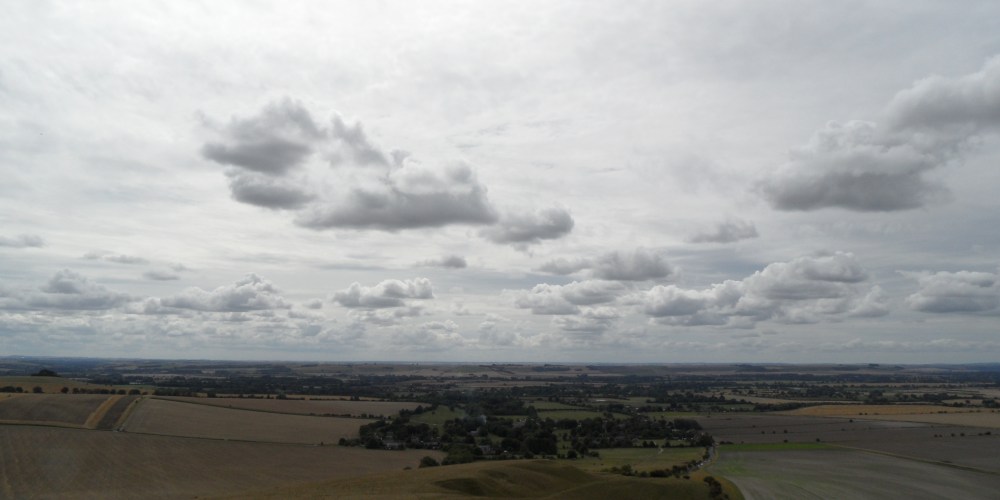
After just a few minutes’ walk, this contrast is strikes in all its glory. After passing through a couple of gates, the crest of the hill is now before us and each step of the approach reveals more of the breathtaking surroundings below. Suddenly that large bowl has gone and the Vale of Pewsey opens up beneath us, spreading out for miles into the distance. A number of villages dot the landscape, interspersing the endless fields of varying shades and colours before the hills of Salisbury Plain roll forth at the far side a few miles away. A late summer haze, caused by dust from the harvest, does nothing to dampen the impact of this sudden world presenting itself.

Looking along one of the Adam's Grave ditches on Walker's Hill, revealing the Vale of Pewsey below.

Looking along one of the Adam’s Grave ditches on Walker’s Hill, revealing the Vale of Pewsey below.

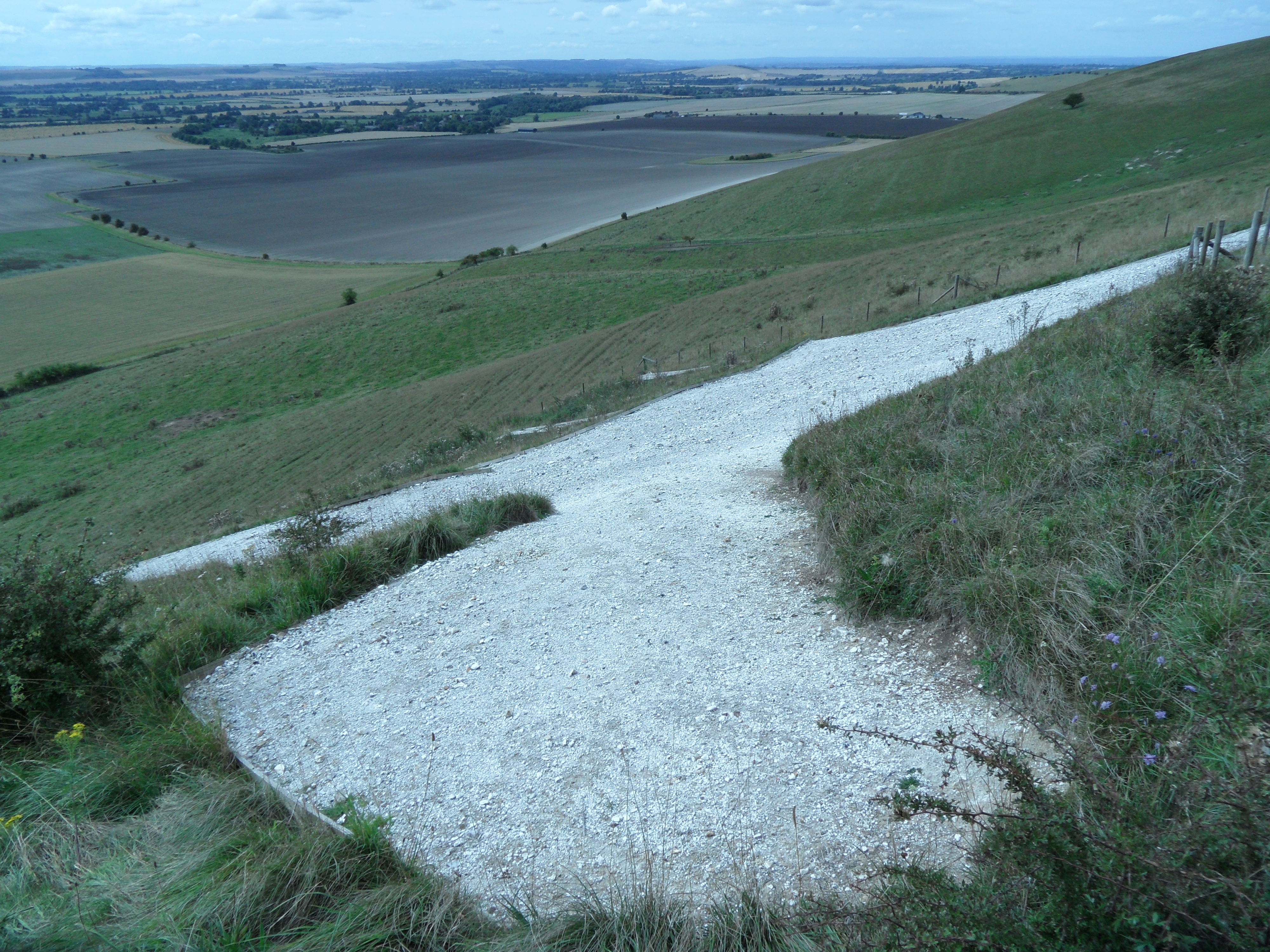
Drinking in the view, we decide to follow the path along the southern ridge, this time populated by cows rather than the sheep which had occupied the other side. The contours rise once more, the path now taking us through gorse bushes, before curling round northwards. This curve reveals the face of Milk Hill and the white chalk horse it proudly boasts to all down in the Vale below.

The Alton Barnes White Horse on the face of Milk Hill.

The Alton Barnes White Horse on the face of Milk Hill.

White horses on hillsides are one of Wiltshire’s claims to fame, with 13 of the 24 known to have been built in the country appearing here. Exactly why people have historically been drawn to doing this is not really clear and this particular one seems to be no more than a product of the nineteenth century landowner’s whim. Commissioned by Robert Pile in 1812, it now brings many visitors to the area and, at 160 feet by 166 feet, is a reference point visible throughout the Vale.

A family passes us by, desperately trying to coerce their dog into following obediently, with young children demonstrating the comfort levels of this walk. We make our way round towards the horse, which itself is fenced off but the path almost guides us along its back. Up close the details become clearer, from the pointed ears to the patch of grass which forms its eye, making it clear this is much more a work of art than a hastily cobbled together bit of fun.

The tail of the White Horse, looking south-west towards the villages of Stanton St Bernard and All Cannings.

The tail of the White Horse, looking south-west towards the villages of Stanton St Bernard and All Cannings.

Beyond the horse, most walkers tend to carry on along the Downs towards Devizes, but I fancy something different and guide us ‘off-piste’, trekking our way back up towards the summit. As well as boasting the white horse, Milk Hill is also the second highest point between Bristol and London and the views it offers are well worth the climb. From the right spots it is possible to have the Vale on one side while being able to see Silbury Hill and Avebury on the other. 

The north side of the hill drops us back down into the great grass bowl of the inner slopes and we skirt around the edge of a few sheep fields, something I won’t entirely recommend but not really a problem if you don’t do too much to disturb the livestock. It is also a more taxing walk and you will end up having to hop over some barbed wire fences as there are no gates to ease your thoroughfare. Circling back round towards our starting point, we want to return to Walkers Hill where what appears to be a small mound sits like a nipple on the peak.

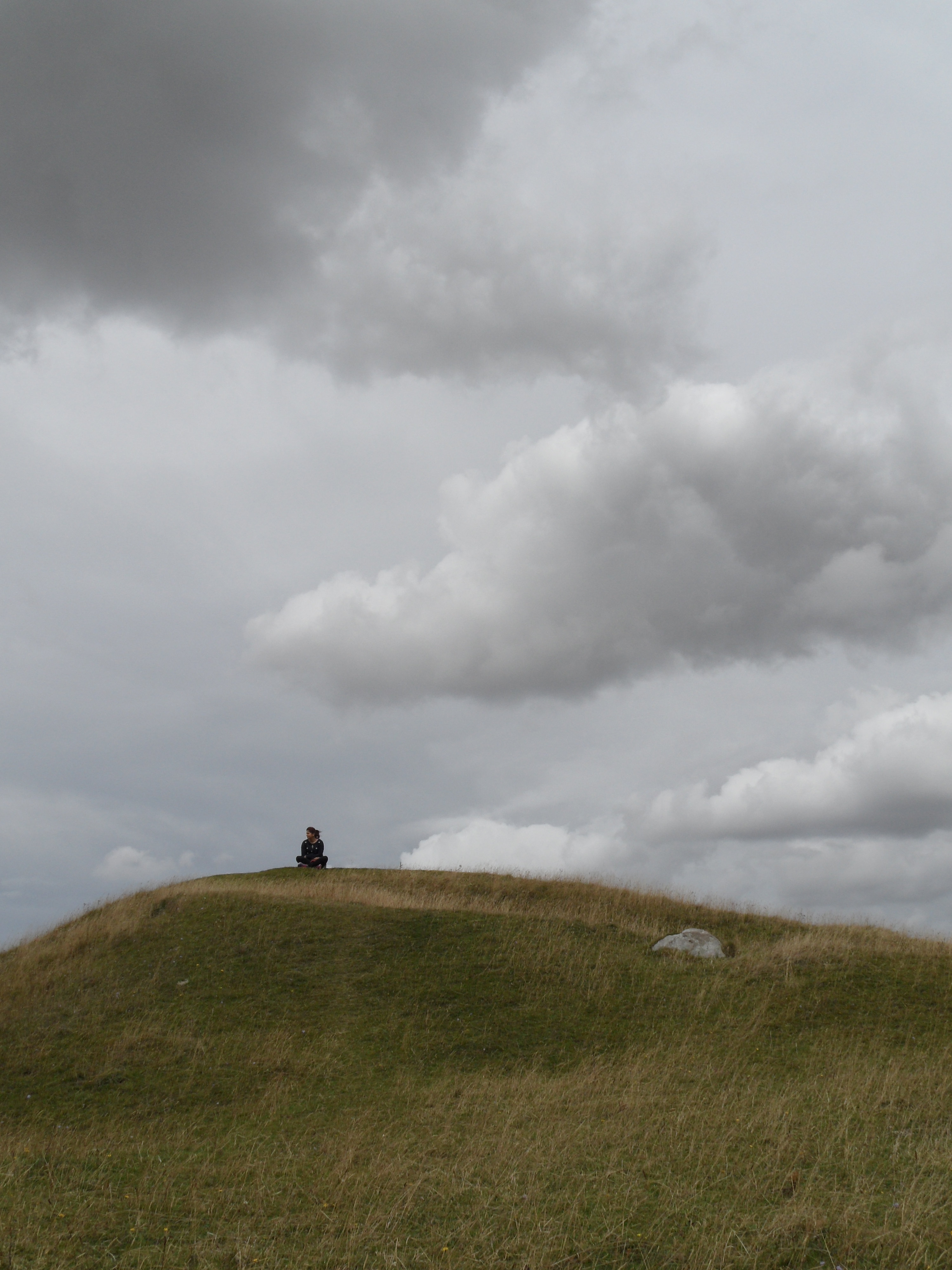
The very deliberate-looking ditches around the mound- which I used to sledge down with friends in the snow when I was young- hint that there is more going on than first appears obvious and, although there is no information on any nearby signs to explain, the ‘nipple’ is actually another of Wiltshire’s many neolithic burial mounds, known as Adam’s Grave. Its history is vague, although some reports suggest that a nineteenth century excavation discovered three partial skeletons inside and, to excite the children, a couple of bloody Anglo-Saxon battles were fought here in the 6th and 8th centuries when it was known as Woden’s Burg. Any sort of discernible structure is now long gone but enough remains to pique the interest of those who study these kinds of things. For those who don’t it is still highly recommended as the finest viewing spot of all.

Sitting on top of 'Adam's Grave'. Visible is a large stone that likely formed part of the original structure.

Sitting on top of ‘Adam’s Grave’. Visible is a large stone that likely formed part of the original structure.

We spend a good ten minutes sitting on the very peak here, marvelling at the 360 degree vista. Upon taking the time to really pause, the silence becomes striking and it is by a distance the most serene point of the walk. The only disturbance comes from a gentle breeze; all other walkers might as well be a hundred miles away instead of a few hundred metres and the roads and villages visible below seem to be in another world, all activity playing out silently on a stage that we have no place on.

It is at this point that the famous British summer time begins to catch up with us. With the sky now getting ever more grey we rouse ourselves from our reverie and make a retreat to the car. Regardless of the imperfect weather, though, it had been a beautiful way to spend a weekend morning and, of particular importance on this autumnal feeling day, the ideal prelude to a Sunday roast.

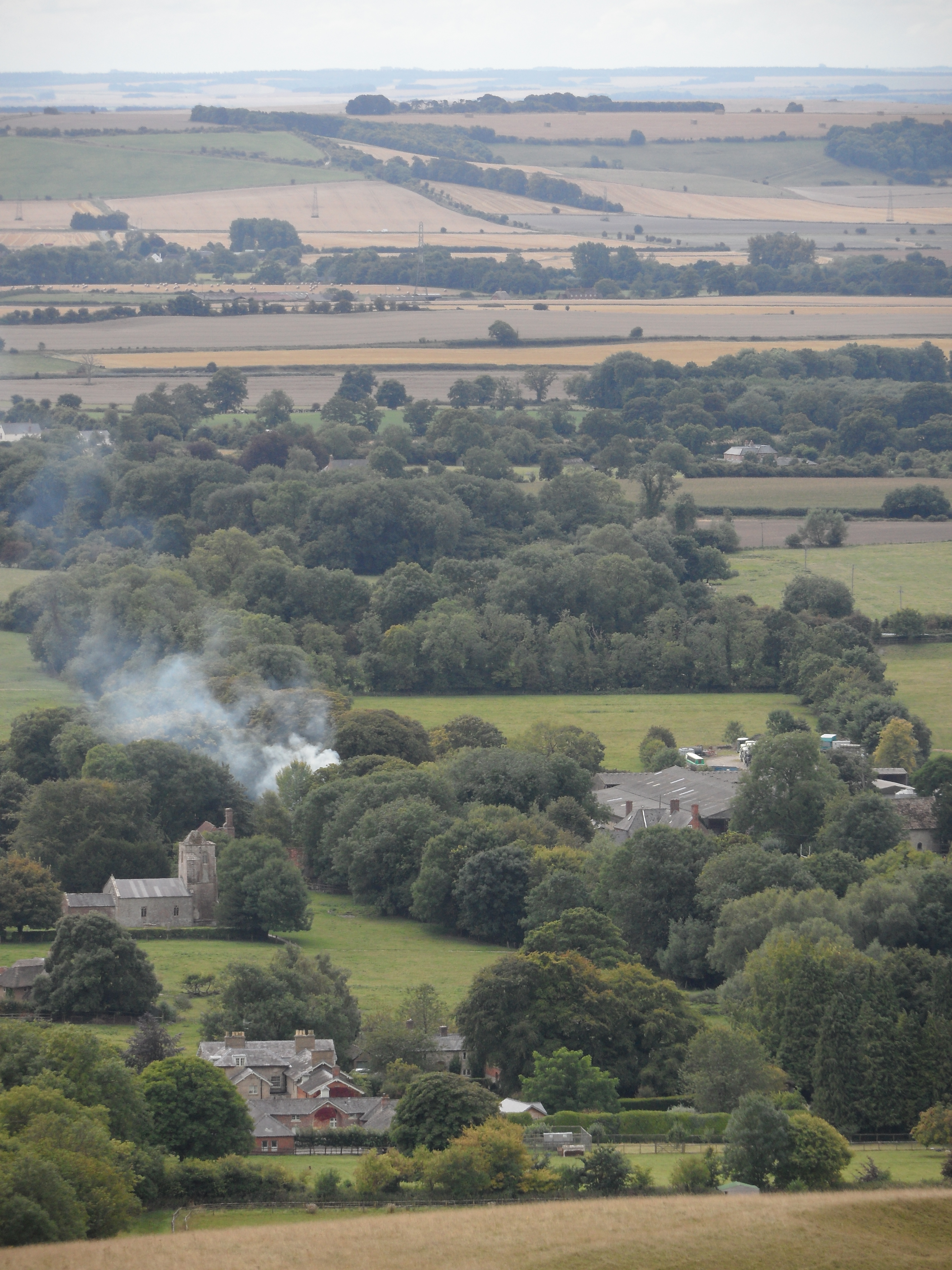
Alton Priors and beyond, seen from the top of Walkers Hill.

Alton Priors and beyond, seen from the top of Walkers Hill.

A Journey to Ancient Wiltshire

Laying his body in its dark chamber, the few tribesmen allowed inside the mound uttered their final words to their chief before returning out into the sunlight where the crowd was gathered. Deep inside a large fire were the bones of their previous leader, being returned to the earth by the heat of the flames. On seeing the elders emerge, the people began to throw flowers and sheaves of wheat onto the pyre before pointing their faces skywards and entering together into the song of the dead.

I’m making up every single word of this, of course; I have absolutely no idea about neolithic burial practices, but then it seems nobody else really does either (although evidence does suggest that bones were removed from their resting places to be used in some sort of ritual). All anybody seems sure of is that the more prominent people had their bodies lain to rest in large, communal chambers, or long barrows as they are known.

The West Kennet Long Barrow is one such place, one of the most famous of its kind. Built a full millennium before anyone in Giza had struck upon the ostentatious idea of grossly oversized pyramids, you can count on one hand the number of existing man-made buildings that are older than this stony chamber in the entire world. The 5,500 year-old structure is part of the Stonehenge and Avebury UNESCO World Heritage Site and marks an important change in human history, the shift away from being nomadic hunter-gatherers to being the inhabitants of fixed agricultural communities. This is people creating permanent buildings for their dead, tying themselves to a specific location for the first time.

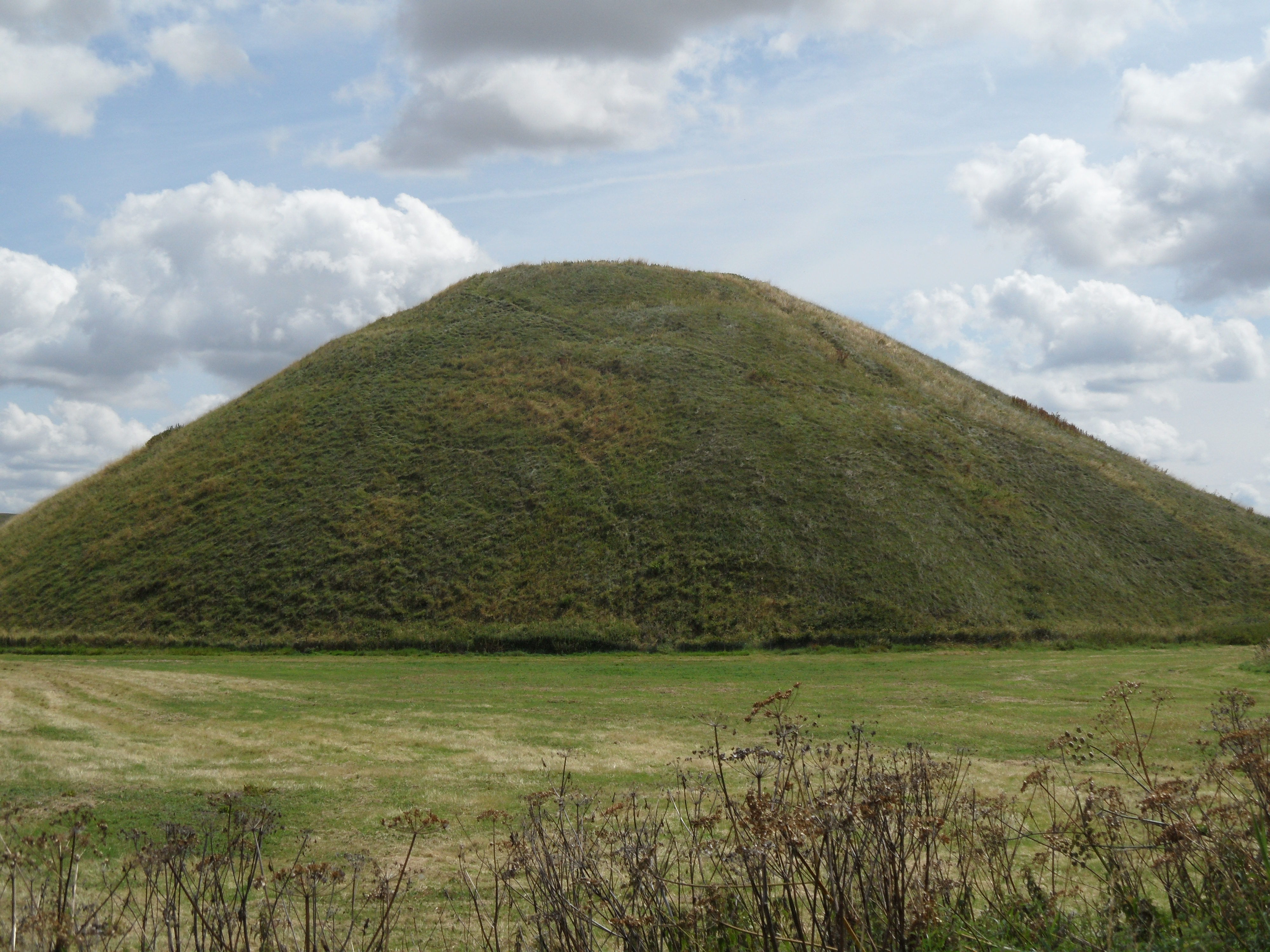
My girlfriend and I decided to visit on a warm Sunday morning. Parking is available in a layby on the main road but we chose to use the car park provided a couple of hundred metres further on at the other nearby attraction, Silbury Hill. At 131 feet high, this has the fairly tenuous honour of being the ‘highest man-made prehistoric hill in Europe’ (I’m not sure how much competition there is for that particular title), although quite why man did make it is entirely unknown, despite some educated guesswork. From a visiting point of view, due to a mixture of conservation and health & safety regulations there is very little to do there other than view it from a distance.

Silbury Hill.

Silbury Hill.

Walking little more than a Usain Bolt-esque distance past the hill, you arrive at the bottom of the track towards the Long Barrow. There is no need to be concerned with opening times; the English Heritage website gives the gloriously laissez-faire guideline of ‘any reasonable time during daylight hours’ and entrance is not just free but entirely unregulated.

This track was sprinkled with a steady trickle of visitors making their way over what little of the River Kennet had survived this far into the summer and up the side of a small-ish hill to where the Long Barrow sits prominently on the brow. In complete contrast to Silbury Hill, visitors are more than welcome to wander around, over and inside the burial chamber, although perhaps a little more could be done to provide guidance and information beyond the one sign they have near the entrance.

For the most part it looks from the outside like a long, thin mound of grass which rises up almost inexplicably from the middle of a farmer’s field. People walk along the top of it, as though like they are venturing down the back of a giant crocodile, admiring the panoramic views of the surrounding countryside. While maintained, it is by no means pristine and wild flowers grow over and around it, making it all feel less of a tourist attraction and more the authentic tomb is was built as.

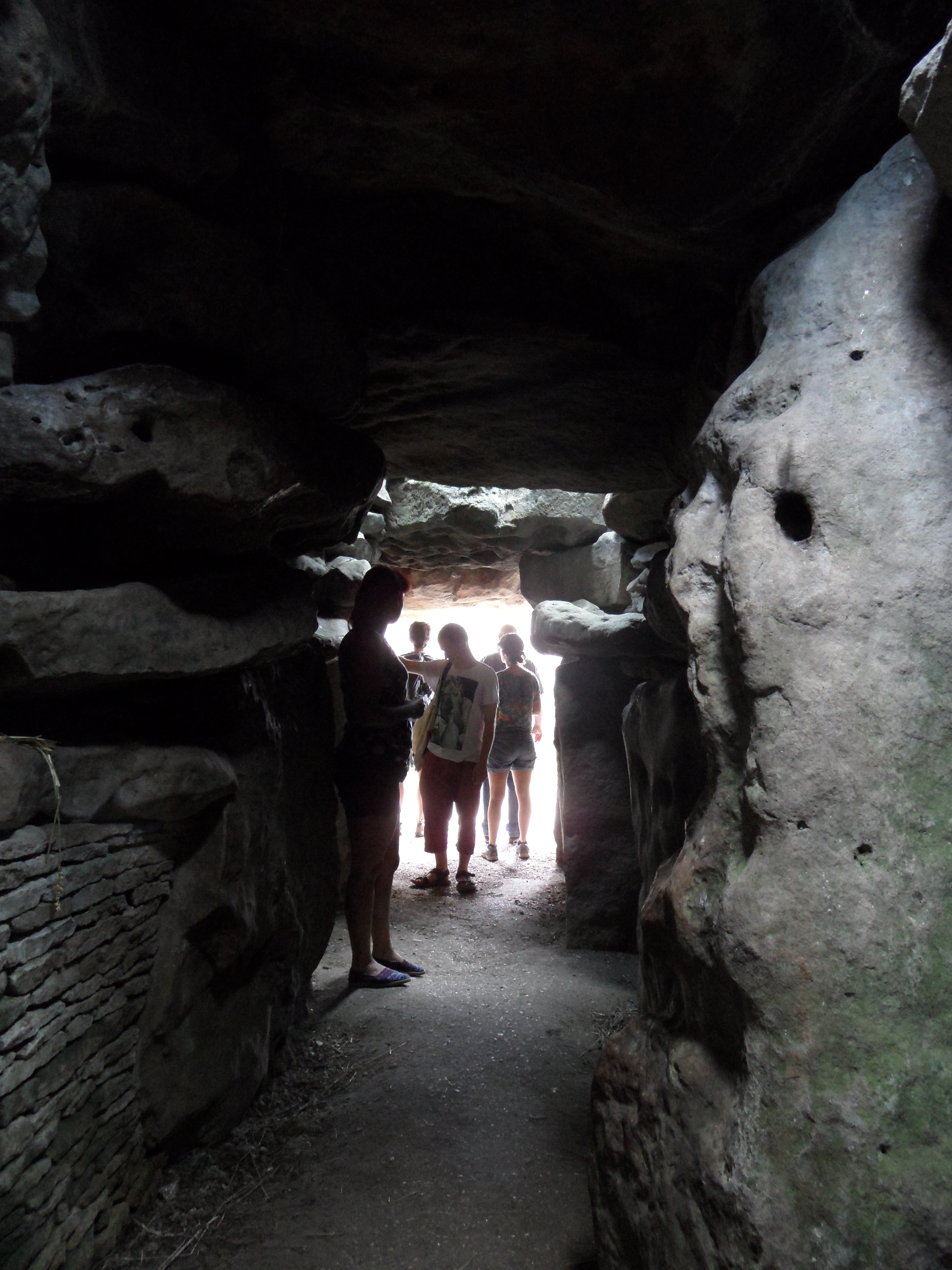
A line of large stones provides a screen that semi-hides the entrance, itself composed of a structure reminiscent of the Stonehenge arches. Inside, the dark stone walls and dirt floor are illuminated by some fairly jarring skylights that have been installed in the roof which, while functional, do little to maintain the illusion of ancient man.

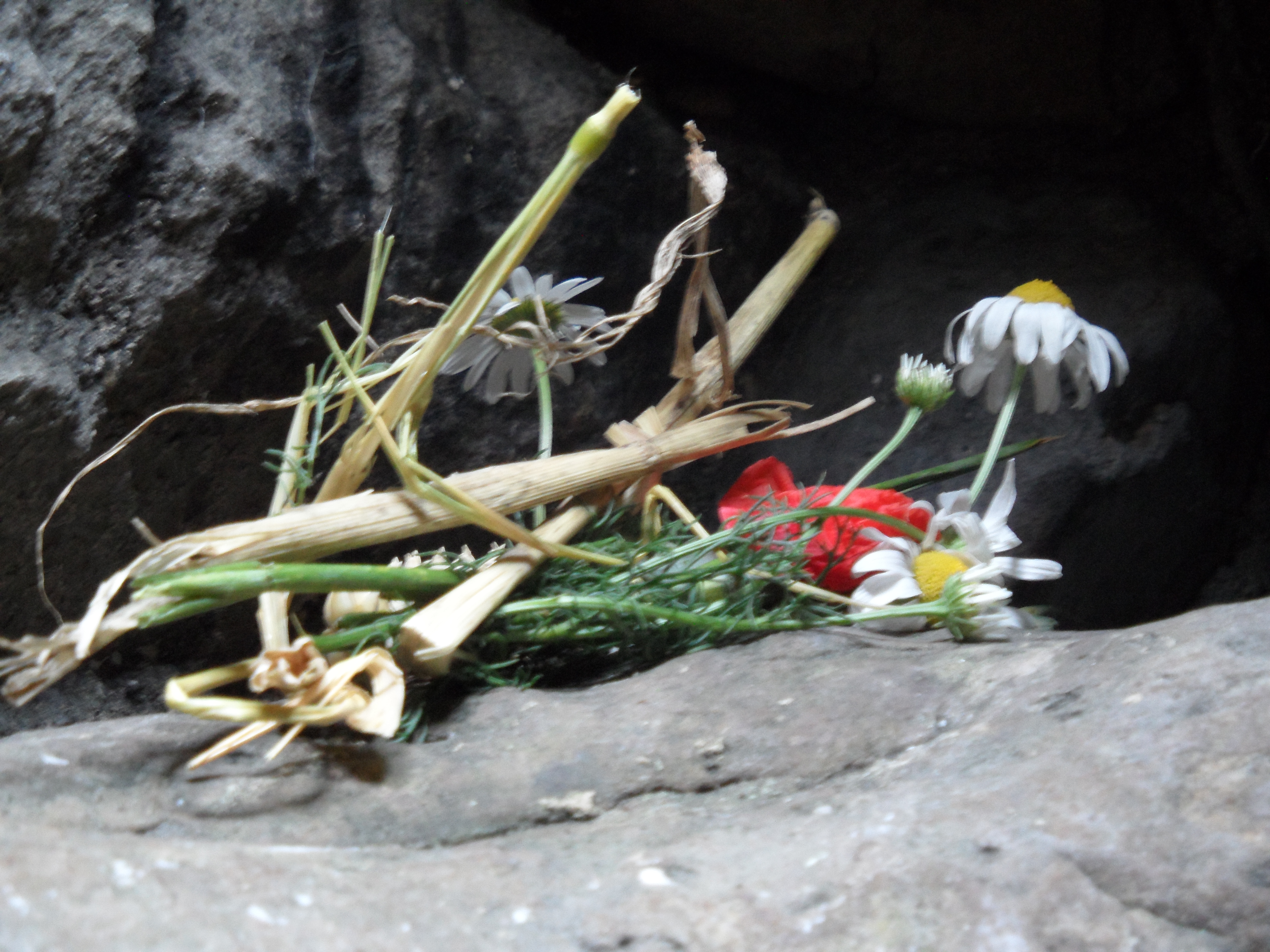
There are four chambers coming off a main passageway which leads to a fifth at the western end. A number of visitors had left small bunches of wheat and flowers on some of the stones, seemingly one of the paganistic rituals that the neolithic landscape still draws to the area. They hint that the site is a place of pilgrimage for the modern druids who come here alongside the more celebrated attractions at Stonehenge and Avebury.

One of many bunches of wildflowers placed on stones within the chamber.

One of many bunches of wildflowers placed on stones within the chamber.

People wandered in, poked their heads into each of the chambers and headed back to the door. In truth there isn’t a huge amount to see or do, people wanting the spectacular will only be disappointed, but there is something fairly remarkable about being in building that has been around longer than almost any other on the planet, somewhere that has seen both flint axes and iPhones as the peak of technology.

SAM_0606

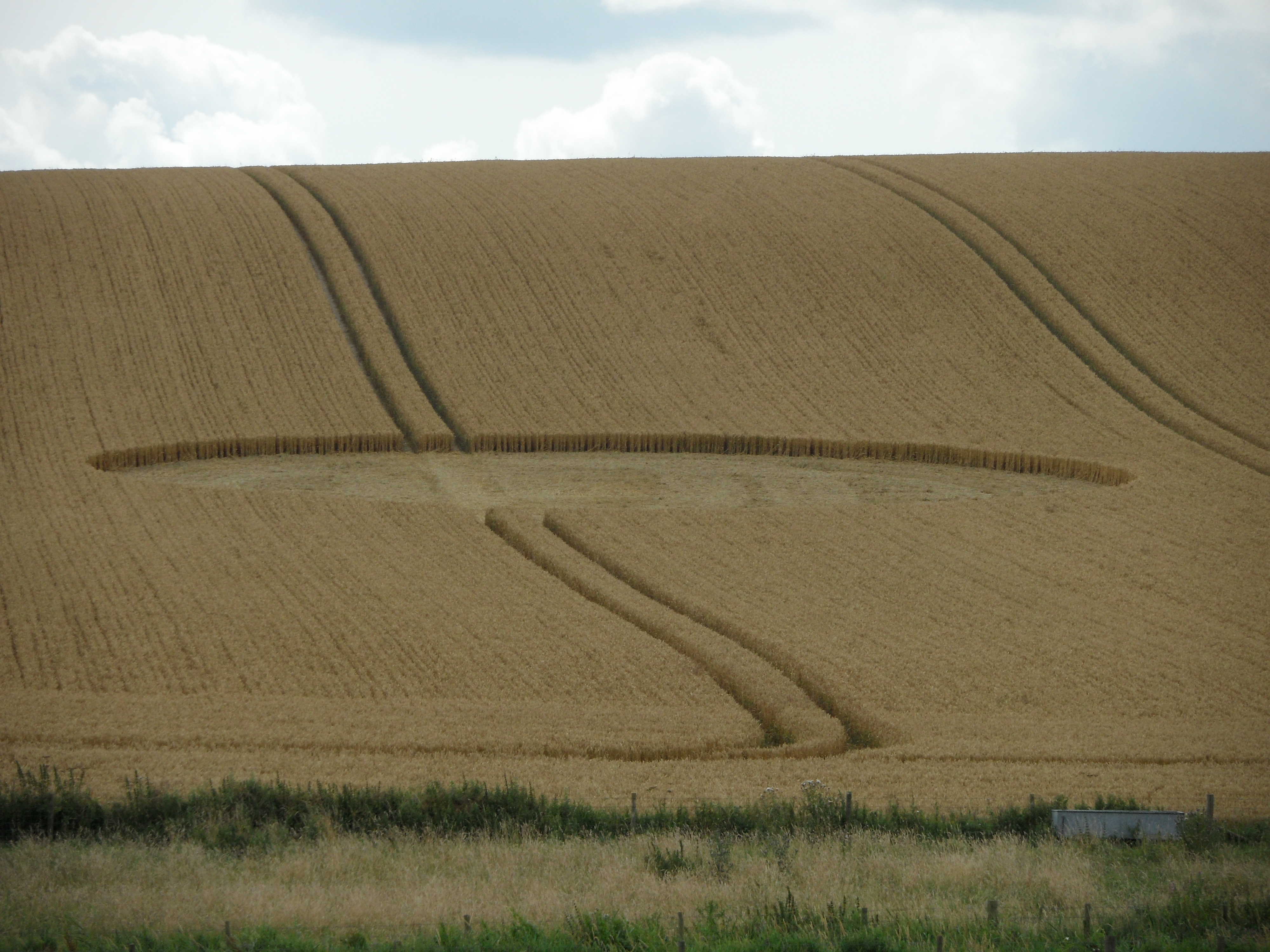
Back outside, and from the top of the mound we looked down towards Silbury Hill and beyond towards where the Avebury stone circles stand. On the slope below us someone had flattened the wheat into a crop circle. All together it provided a vision of what makes this a particularly strange part of the world; the ancient history, the enduring paganism, the ‘mysterious’ crop circles, all largely unrelated and yet somehow feeling part of one timeline. And just a few miles away a new long barrow is currently under construction using the same old methods.

Standing on top of the burial chamber, looking down towards Silbury Hill.

Standing on top of the burial chamber, looking down towards Silbury Hill.

SAM_0600

Perhaps this is why the West Kennet Long Barrow is not cordoned off and kept away from the public, because here ancient history is still somehow current. The past is not sanitised and kept behind glass museum cases but is allowed to continue as part of the same modern life that makes grand patterns in fields and leaves offerings to the ‘earth mother’ in tombs. History is not really history at all. Enter as please, do as you need and be on your way again, just as people have for five and a half millennia.

For our return we chose a path along the tractor lines through the field, pausing briefly as we stood in in the centre of the crop circle. The visit had been short but illuminating, and despite the lack of any real action it should certainly be part of the tour taken by anyone seeking to understand what Wiltshire is truly all about.