Ancient Wiltshire

The Ancient in The Modern World

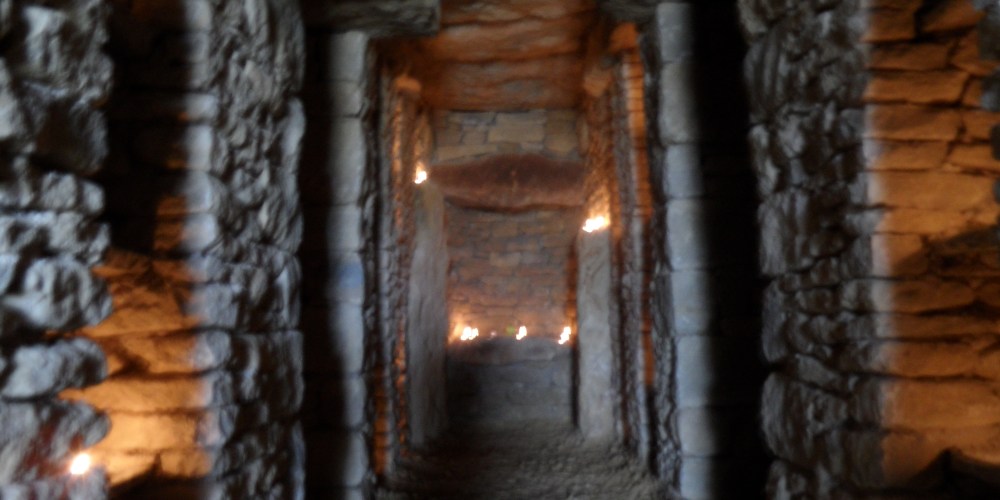
The dark might have been oppressive if weren’t adorned with dozens of tiny flames. Even combined, their meager amber glow could barely penetrate the depths of the stoney chamber, but each one was a point of warmth on the thick black canvas. So far the tomb only housed one person’s remains, but over the coming years that numbers is to grow into the hundreds.

A few weeks ago my girlfriend and I visited the West Kennet Long Barrow, one of the oldest existing buildings on the entire planet. Wiltshire is famous for its links to ancient history, made especially real by the numerous neolithic tombs that still scatter the county and that particular one is the flagship example. But now a local farmer has brought all that bronze age burial business into the www. era by constructing the first long barrow to be built in Britain for four millennia and offering up the plots inside it to anyone with a bit of cash going spare.

The work has been done over the course of 2014 just outside the village of All Cannings, partly using chalk and earth from the construction of a barn at a neighbouring farm and partly using stone imported into the area, including some bluestone of the kind that appears at Stonehenge. After all the effort, today was an open morning to show off the end product to anyone who was interested. ‘Get there quickly,’ we were told. ‘The owner wants to get to the pub.’ Can’t argue with that, so it was on with the boots and a quick scramble across the Kennet & Avon canal to where this 21st century tomb sits inconspicuously in a muddy field.

The entrance to the new long barrow

The entrance to the new long barrow

Even as we walked along the track leading towards the barrow we could hear the chattering voices of a healthy crowd which had converged from far parts of Wiltshire and beyond. On our arrival, a press photo shoot was being carried out in the doorway so we turned to the refreshments table which had, fittingly, been laid out with English Heritage approved mead. Honey-sweet and packing quite a punch, the golden liquid went down smoothly to set us up for an intimate guided tour with the owner’s wife and her small torch.

While on the whole it appears nothing more than a large mound from the outside, there is a front-facing wall made of large stones which houses the entryway. These may not be as grand as the sarson stones which form the threshold to other barrows, but their effect is still impressive. Beyond that is a wrought iron gate leading into a central passageway within.

Suddenly the dark becomes enclosing, and by the weak torchlight we were guided into one of the round chambers which lead off the spine. The entire interior is made from Cotswold dry stone, about the size of a standard brick, piled high from floor to round, spiralling ceiling. Built into the walls are the niches which are to house the urns- either one or an entire family’s worth- each one adorned this morning with a small candle. The weight of the earth overhead insulates completely from all noise and happenings outside.

There is already one lady interred here. Her spot was chosen by serendipity and a rather sweet twist of fate: when the deceased lady’s husband visited the barrow, a butterfly came in, flew straight to that particular shelf and settled there. He knew that had to be the one. The owner, meanwhile, has bagged his spot at the end of the main passageway and marked his territory today with an apple.

A candlelit niche onto which urns will be laid.

A candlelit niche onto which urns will be laid.

The entire construction has been beautifully rendered, truly a testament to both the owner’s vision and the skill of the stone masons. There is a strange, otherworldly feel to the whole place. To say you feel transported to an ancient world would both cloying and misleading, but certainly it induces a feeling of detachment from the modern environment, if only for a few minutes.

We re-entered reality to find ourselves again surrounded by sharp morning light and people planning their walk to the local pub. Being a home for the dead, the long barrow is not just left open for visitors to come and go as they please, but anyone interested in this curious mix of ancient and modern may enter by appointment. For anyone coming to visit the neolithic sites nearby, this offers a wonderfully made point of comparison and is well worth the phone call.

A Journey to Ancient Wiltshire

Laying his body in its dark chamber, the few tribesmen allowed inside the mound uttered their final words to their chief before returning out into the sunlight where the crowd was gathered. Deep inside a large fire were the bones of their previous leader, being returned to the earth by the heat of the flames. On seeing the elders emerge, the people began to throw flowers and sheaves of wheat onto the pyre before pointing their faces skywards and entering together into the song of the dead.

I’m making up every single word of this, of course; I have absolutely no idea about neolithic burial practices, but then it seems nobody else really does either (although evidence does suggest that bones were removed from their resting places to be used in some sort of ritual). All anybody seems sure of is that the more prominent people had their bodies lain to rest in large, communal chambers, or long barrows as they are known.

The West Kennet Long Barrow is one such place, one of the most famous of its kind. Built a full millennium before anyone in Giza had struck upon the ostentatious idea of grossly oversized pyramids, you can count on one hand the number of existing man-made buildings that are older than this stony chamber in the entire world. The 5,500 year-old structure is part of the Stonehenge and Avebury UNESCO World Heritage Site and marks an important change in human history, the shift away from being nomadic hunter-gatherers to being the inhabitants of fixed agricultural communities. This is people creating permanent buildings for their dead, tying themselves to a specific location for the first time.

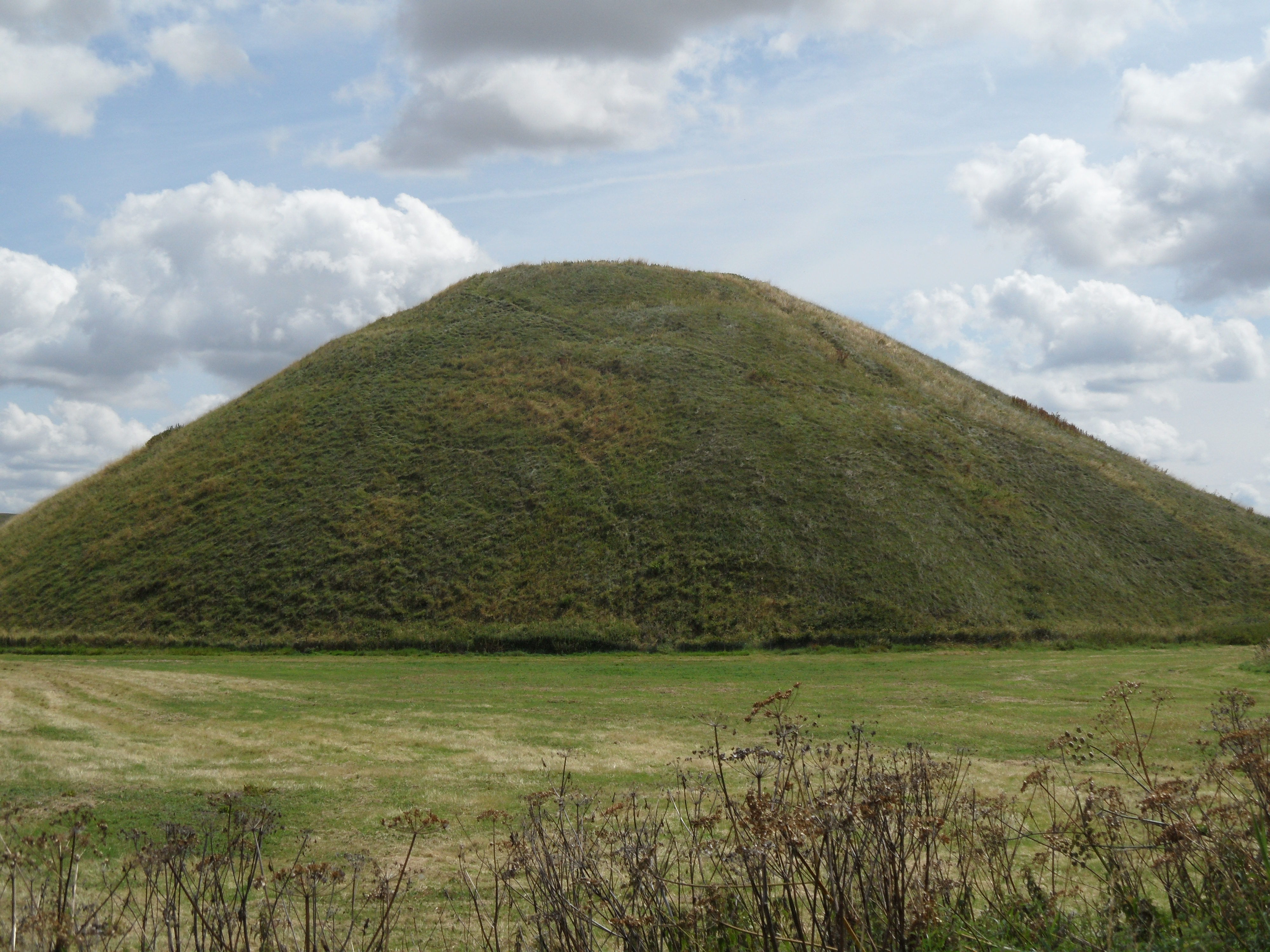
My girlfriend and I decided to visit on a warm Sunday morning. Parking is available in a layby on the main road but we chose to use the car park provided a couple of hundred metres further on at the other nearby attraction, Silbury Hill. At 131 feet high, this has the fairly tenuous honour of being the ‘highest man-made prehistoric hill in Europe’ (I’m not sure how much competition there is for that particular title), although quite why man did make it is entirely unknown, despite some educated guesswork. From a visiting point of view, due to a mixture of conservation and health & safety regulations there is very little to do there other than view it from a distance.

Silbury Hill.

Silbury Hill.

Walking little more than a Usain Bolt-esque distance past the hill, you arrive at the bottom of the track towards the Long Barrow. There is no need to be concerned with opening times; the English Heritage website gives the gloriously laissez-faire guideline of ‘any reasonable time during daylight hours’ and entrance is not just free but entirely unregulated.

This track was sprinkled with a steady trickle of visitors making their way over what little of the River Kennet had survived this far into the summer and up the side of a small-ish hill to where the Long Barrow sits prominently on the brow. In complete contrast to Silbury Hill, visitors are more than welcome to wander around, over and inside the burial chamber, although perhaps a little more could be done to provide guidance and information beyond the one sign they have near the entrance.

For the most part it looks from the outside like a long, thin mound of grass which rises up almost inexplicably from the middle of a farmer’s field. People walk along the top of it, as though like they are venturing down the back of a giant crocodile, admiring the panoramic views of the surrounding countryside. While maintained, it is by no means pristine and wild flowers grow over and around it, making it all feel less of a tourist attraction and more the authentic tomb is was built as.

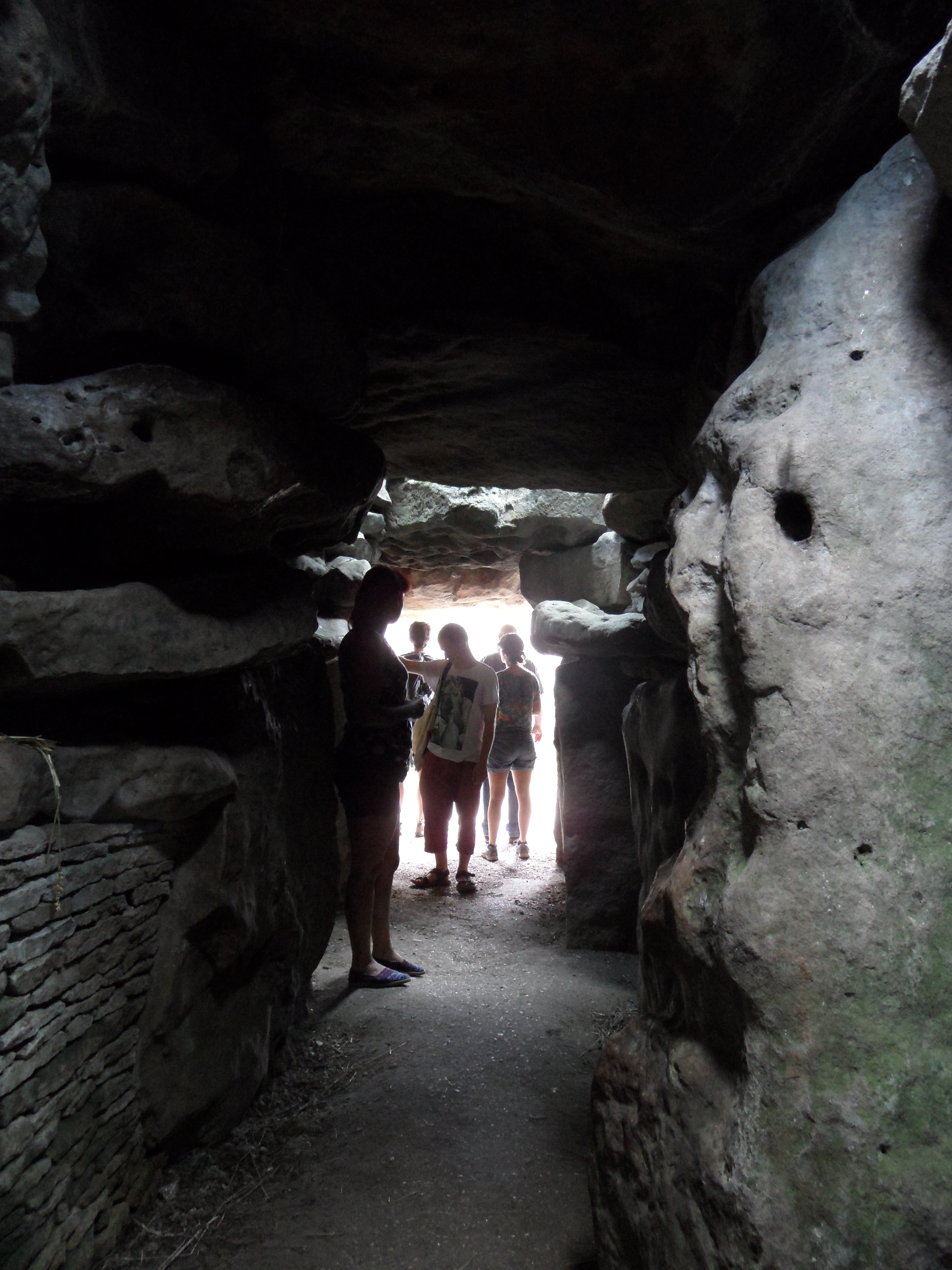
A line of large stones provides a screen that semi-hides the entrance, itself composed of a structure reminiscent of the Stonehenge arches. Inside, the dark stone walls and dirt floor are illuminated by some fairly jarring skylights that have been installed in the roof which, while functional, do little to maintain the illusion of ancient man.

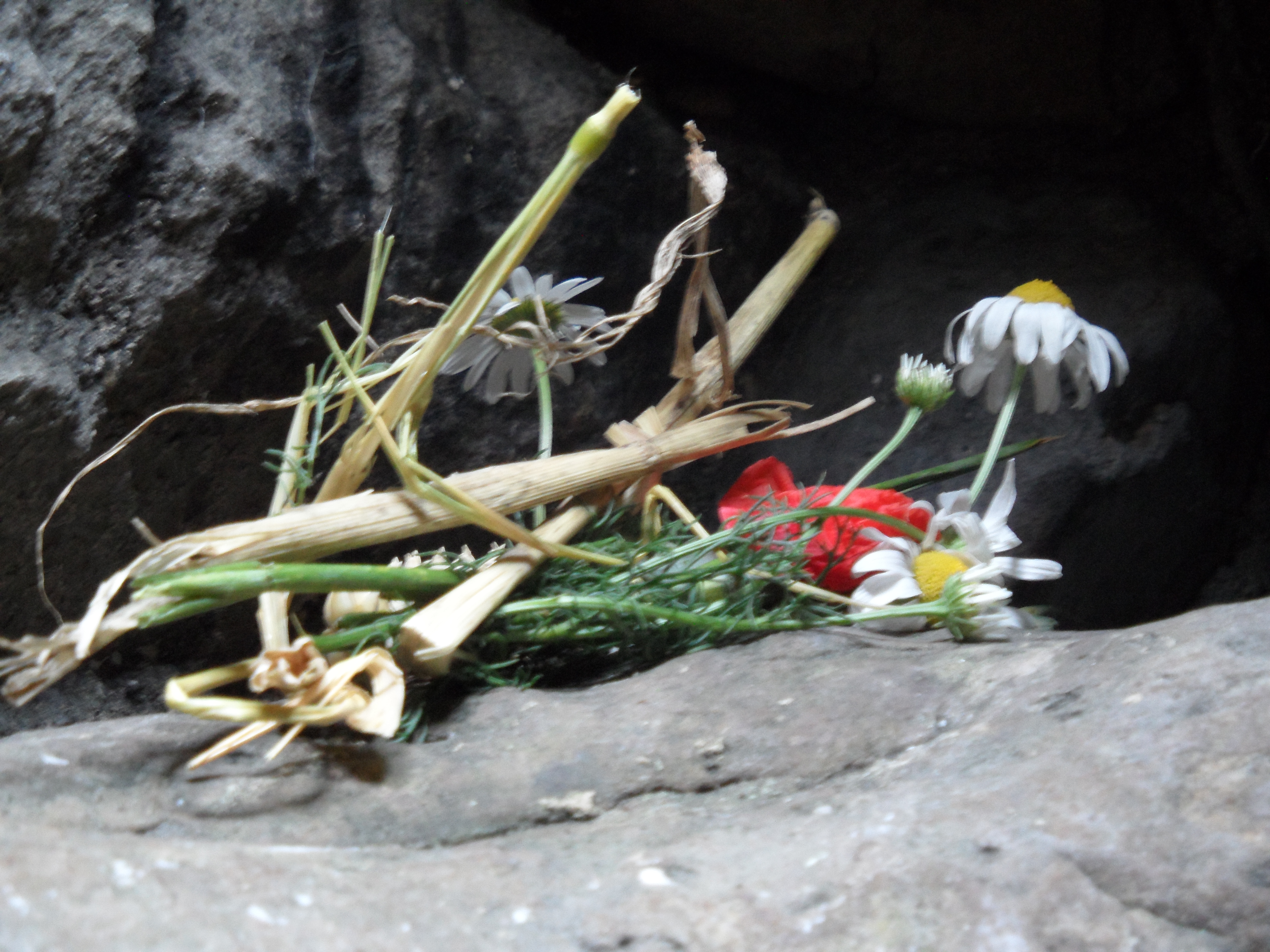
There are four chambers coming off a main passageway which leads to a fifth at the western end. A number of visitors had left small bunches of wheat and flowers on some of the stones, seemingly one of the paganistic rituals that the neolithic landscape still draws to the area. They hint that the site is a place of pilgrimage for the modern druids who come here alongside the more celebrated attractions at Stonehenge and Avebury.

One of many bunches of wildflowers placed on stones within the chamber.

One of many bunches of wildflowers placed on stones within the chamber.

People wandered in, poked their heads into each of the chambers and headed back to the door. In truth there isn’t a huge amount to see or do, people wanting the spectacular will only be disappointed, but there is something fairly remarkable about being in building that has been around longer than almost any other on the planet, somewhere that has seen both flint axes and iPhones as the peak of technology.

SAM_0606

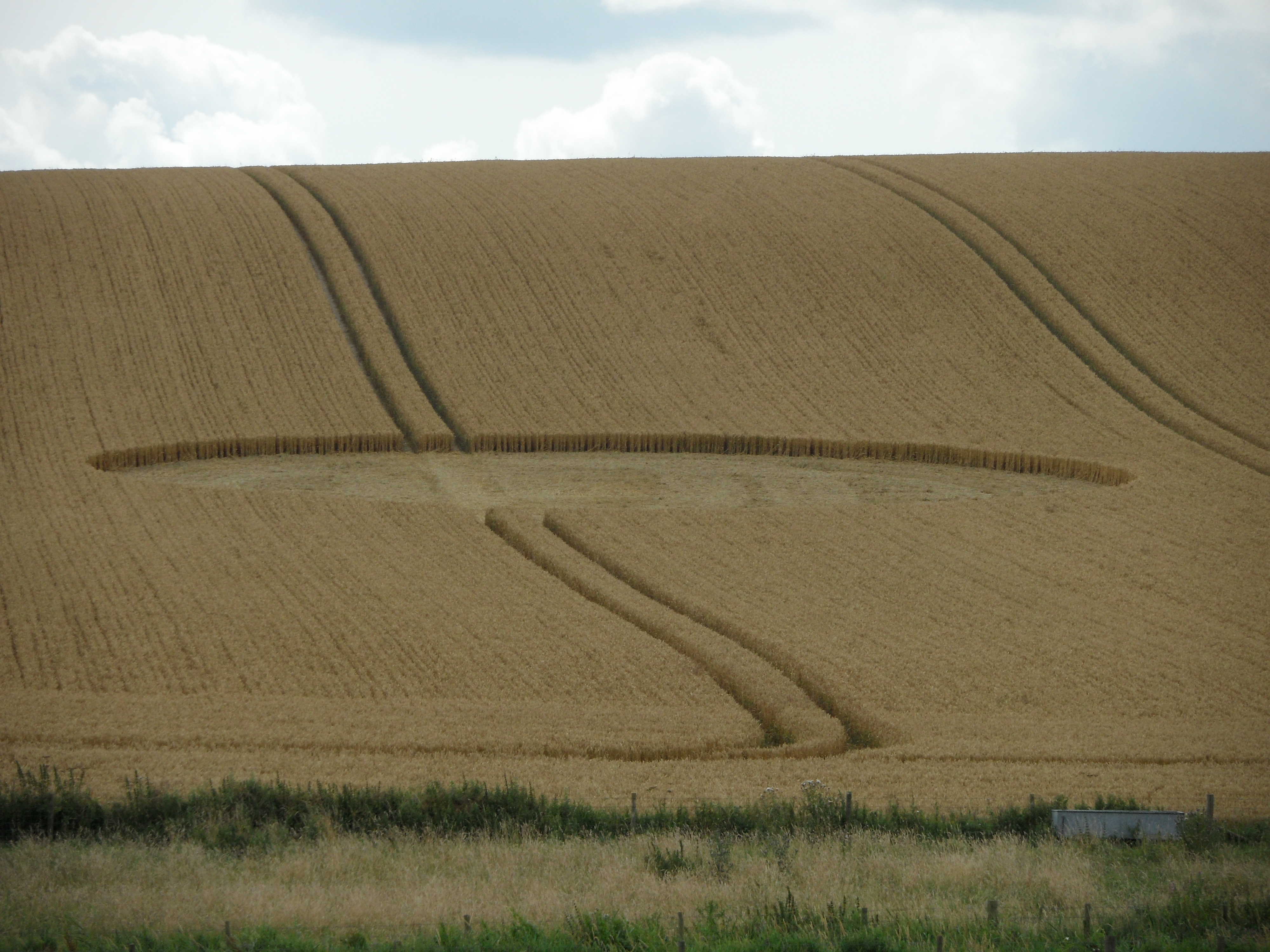
Back outside, and from the top of the mound we looked down towards Silbury Hill and beyond towards where the Avebury stone circles stand. On the slope below us someone had flattened the wheat into a crop circle. All together it provided a vision of what makes this a particularly strange part of the world; the ancient history, the enduring paganism, the ‘mysterious’ crop circles, all largely unrelated and yet somehow feeling part of one timeline. And just a few miles away a new long barrow is currently under construction using the same old methods.

Standing on top of the burial chamber, looking down towards Silbury Hill.

Standing on top of the burial chamber, looking down towards Silbury Hill.

SAM_0600

Perhaps this is why the West Kennet Long Barrow is not cordoned off and kept away from the public, because here ancient history is still somehow current. The past is not sanitised and kept behind glass museum cases but is allowed to continue as part of the same modern life that makes grand patterns in fields and leaves offerings to the ‘earth mother’ in tombs. History is not really history at all. Enter as please, do as you need and be on your way again, just as people have for five and a half millennia.

For our return we chose a path along the tractor lines through the field, pausing briefly as we stood in in the centre of the crop circle. The visit had been short but illuminating, and despite the lack of any real action it should certainly be part of the tour taken by anyone seeking to understand what Wiltshire is truly all about.