Uncategorized

Ghosts and Ghouls in the Old City

With a loud creak, the iron gate swings open. Our group walks into the dark courtyard, enclosed on three sides by the high stone walls of the old workhouse. The illuminated spire of the cathedral stands tall over nearby rooftops, the glow around its shadowy nooks forming spectral vertebrae.

This is the scene half way around the Salisbury ghost tour and, as our guide tells us about a lady in this building who woke in the middle of the night to the sound of disembodied sobbing, a gust of wind whips through the yard with an eerie drawn-out whistle.

It raises a few smiles among the 20 or so people who came along, a larger group than the organisers had been expecting. The guide makes no mention of the ghostly sound effects, though: importantly, the tour doesn’t take itself too seriously. Instances like this are treated as amusing coincidences rather than signs of a haunting presence.

20151229_184811


All along, our guide has been aware that not everyone believes in ghosts and restrains herself from any overblown melodrama. I was grateful for this as my own inherent cynicism prevented me from truly getting into the spirit of things, but actually that proved no barrier to enjoying the experience.

The real strength of the ghost tour is that it doesn’t try to produce a cheap horror show, but simply gives you the stories of reported hauntings and lets you do what you will with the information. And, believer or not, you will learn of fascinating tales from Salisbury’s history along the way.

20151229_183254

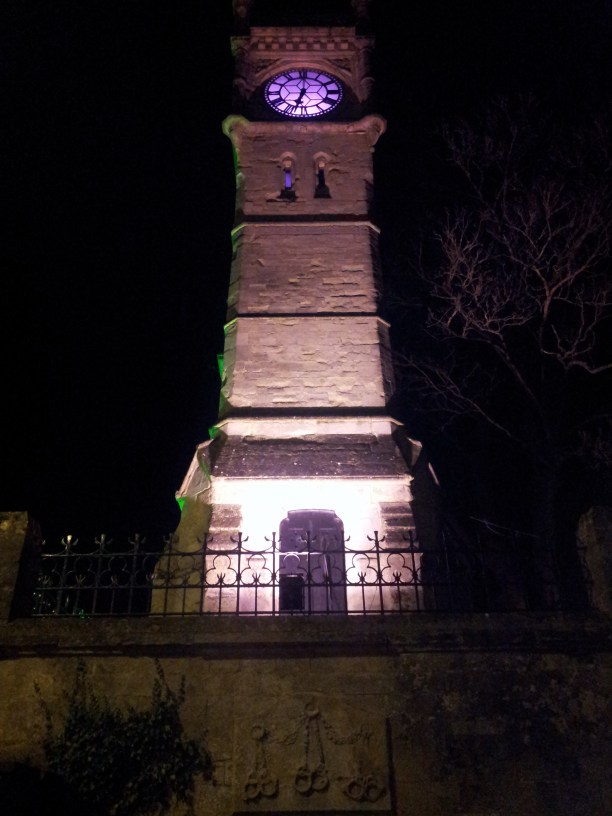
Clock Tower at the site of the old prison.


Did you know, for example, that where Debenham’s now sits was the site of the Duke of Buckingham’s execution after he turned on the king during the Wars of the Roses? Or that builders found a hand, holding a pair of playing cards, in an old fireplace in a building behind St. Thomas’ Church? Or that the old hospital had an exorcism performed on it when it was converted for commercial use in 1992?

The tour peels back the skin of the town and its familiar buildings, revealing histories that you might never consider as you go about your daily business. Local or not- and I have to confess that that I don’t know Salisbury especially well- you should appreciate the alternative insight. Of course it helps if you have a taste for the macabre but it needn’t be seen as essential.

It also makes you appreciate just what a beautiful city Salisbury actually is. As you take your time to wander around and take in the sights, it is impossible to escape the fact that it is truly the gem in Wiltshire’s ‘urban’ (and I use that term loosely) landscape.

20151229_192820.jpg


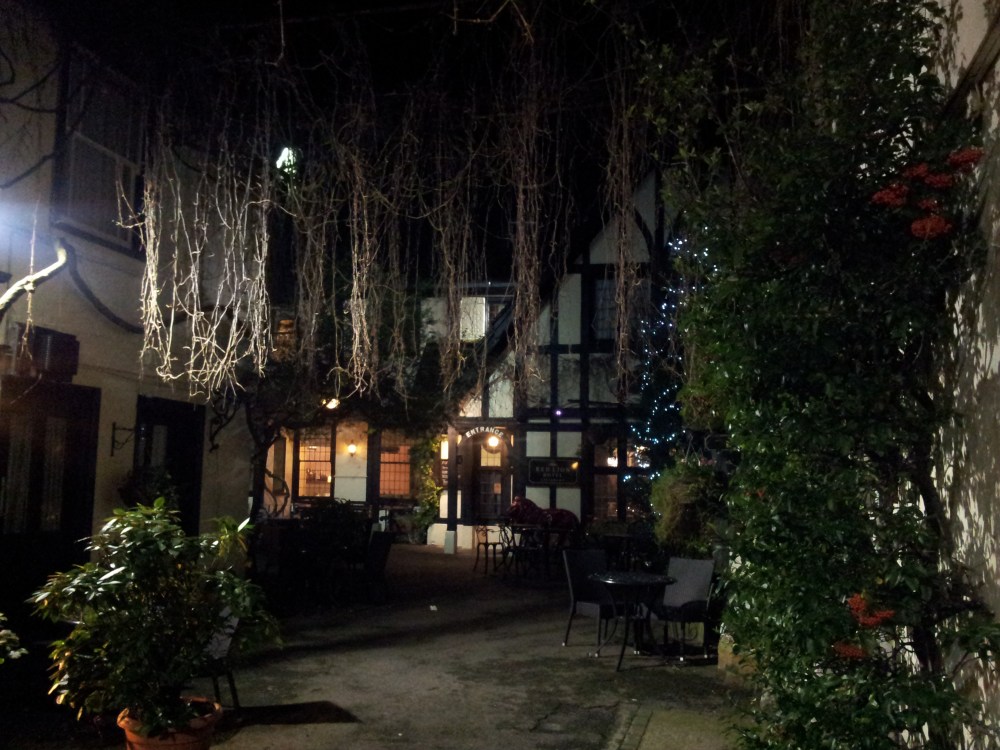
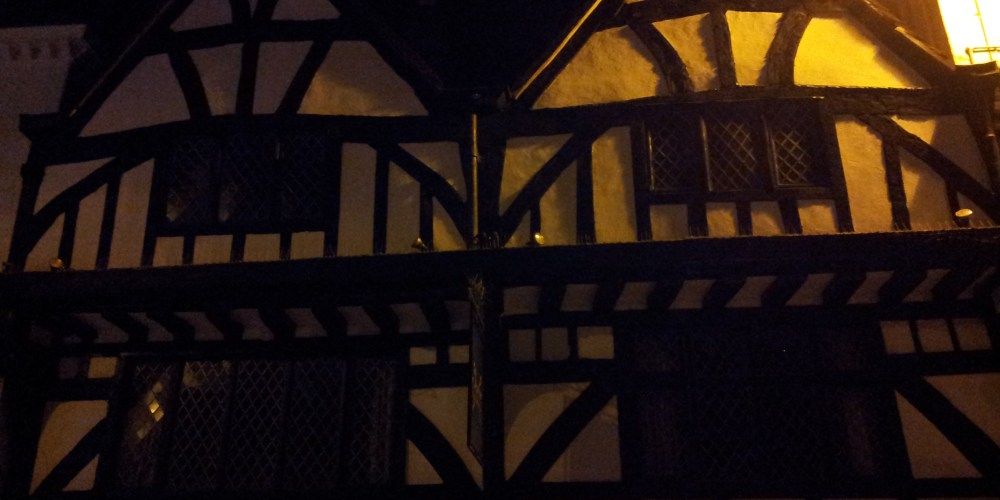
The tour ends back in the city centre, via Cathedral Close, at the Red Lion hotel. Next time you’re nearby, pop into the courtyard there and look up at the attic window to the lifeless face gazing back at out you. If you want to know the story behind it, and many more besides, the ghost tour will reveal all.
Price: £5 for adults, £2.50 for children.
No need to book.

Radioactive Safari

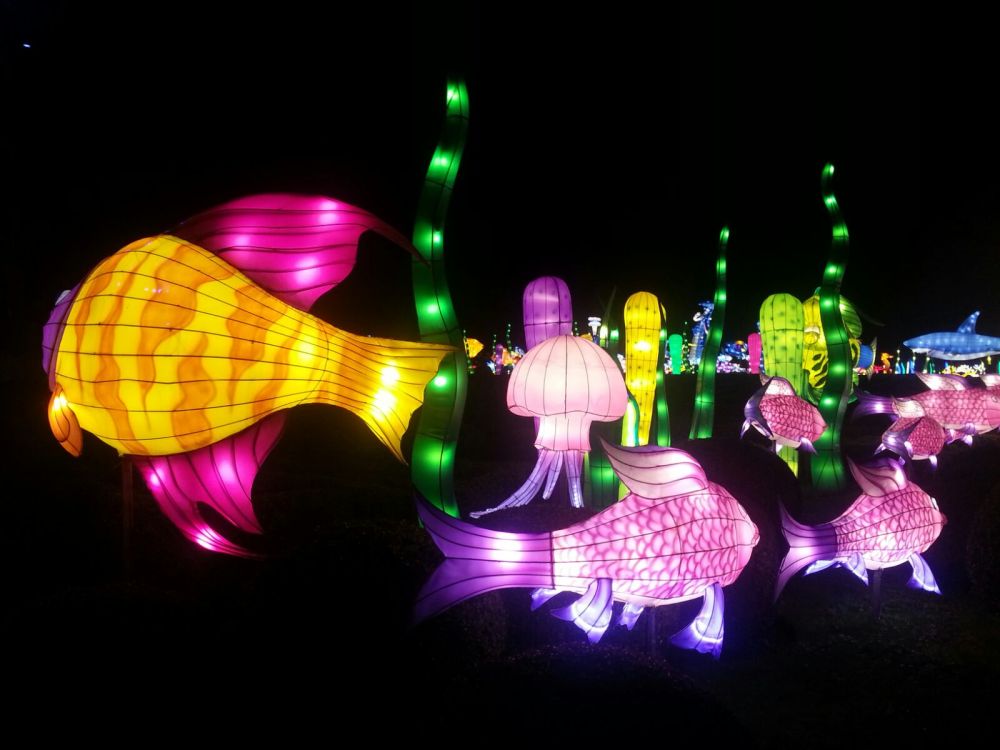
Huge, brilliantly coloured fish float in formation, their dazzling cartoonish forms cut vividly against the sea of deep black. Around them, whales, jellyfish and even a shark roam among the corals and the reeds. The whole experience is like a walk through some sort of electrified, hyped-up Beatles movie on steroids. Radioactive steroids. And that is every bit as spectacular as you might imagine.

IMG-20151222-WA0038


20151222_164940


Once again Longleat is hosting its winter time Festival of Light, the largest ever display of Chinese lanterns to be held in Europe, and it is something which simply has to be experienced.

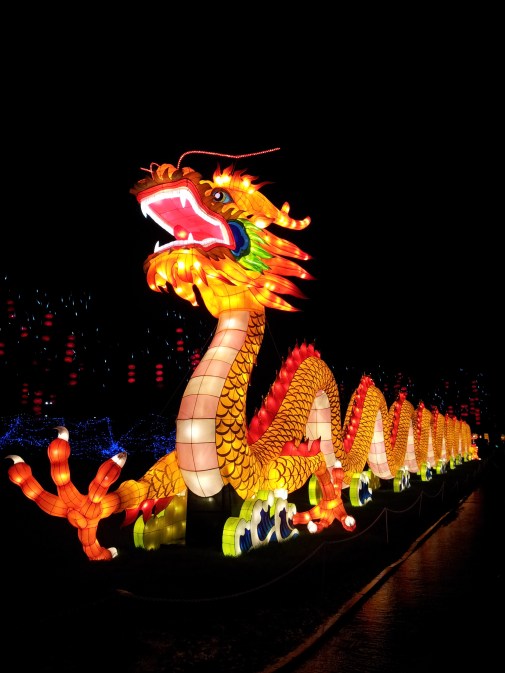
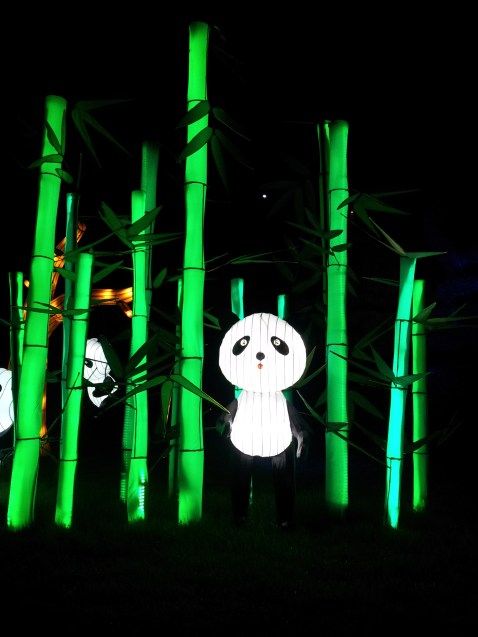
Next to the aforementioned ‘Oceans of the World’, a dragon boat sits on the lake and spits a constant jet of water from its gigantic illuminated head. Outside the main entrance to the house an entire safari park’s worth of animals, including all the favourites Longleat is famous for, gallop on the lawns. Elsewhere a truly vast Chinese dragon runs the full length of a small market, joyful pandas play in a bamboo forest, and a chunk of the famous Terracotta Army guards the Great Wall.

20151222_163301


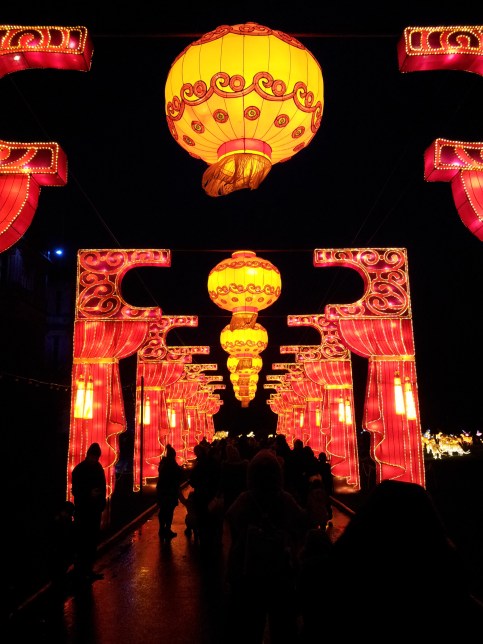
Everywhere you look outside the proud sixteenth century home, the night is pierced through by the mesmerising neon glow from the thousands of lanterns which form all these displays and plenty more besides.

20151222_170255


Christmas at Longleat is more than a little different, and you have to applaud the vaulting ambition of their display. Even more than that, you have to applaud the fact that they have absolutely nailed it.

A slightly more restrained festive special is held inside the house, where each room on the ground floor contains a pastiche of well-known fairy stories and seasonal tales. Some, such as Goldilocks and Little Red Riding Hood, are crafted models, but Scrooge and others are played by live actors who interact with the stream of visitors passing through.

Perhaps to balance out the electricity bill, the house is dimly lit by little more than electric candles, giving the sort of atmosphere its Tudor inhabitants might have experienced as they moved about its ornate rooms. That particular touch earned a mixed reception- although I personally enjoyed it- but it was slightly creepy for younger people, and my two year old nephew didn’t last long before insisting on being taken back outside.

In truth, though, the displays in the house were more of a sideshow, something to fill the gap between voyaging round the safari park (look out for a separate post on that soon) and darkness descending on the lantern display outside.

20151222_165154


That is the real reason why thousands of people were traipsing round the grounds in the December drizzle, battling the winds and doing so with smiles of wonder on their faces.

The press reviews threw all sorts of superlatives at the display but it still exceeded all expectations by some margin. It was bigger, brighter and more dazzling, and a rare treat for both children and adults.

IMG-20151222-WA0047


I have to admit that from time to time I can be a little biased in my appreciation of Wiltshire’s delights. A cynic may say I am sometimes guilty of exaggerating them, while the more generous reader may instead feel that on those occasions I simply dig a little deeper to find a level on which to really appreciate things. No digging is necessary here; the Festival of Lights is genuinely special to anyone, from anywhere. A true Wiltshire gem.

Prices:
Adults: £29.50
Children: £21.95 (Under 3s free)
Disabled/Carer Discount: 50% off
All tickets include entrance to the safari park

Returning to Feed

Not for the first time in the short life of this blog, I seem to have taken something of an unscheduled hiatus. The summer isn’t a great period for free time- despite it undoubtedly being when Wiltshire is at the peak of its powers- but now I should be available to get out and about a little bit again.

On Saturday Calne held its annual food festival. Those who know the town only by reputation would probably be quite surprised by the central area when they arrive there. Despite being known as a relatively grim part of the county- perhaps in part a hangover from the decades of existing around a pork processing plant- the truth is that Calne is pretty unfairly treated by its uninspiring standing.

The green is surrounded by 24 listed buildings and the nave of St Mary’s Church is nearly a full millennium old. Coming up from there, the ornate walkway, made of Cotswold stone, which runs alongside the river Marden before it disappears neatly under the Town Hall has a faintly Florentine feel to it if viewed through optimistic eyes. The library, with its famous modernist sculpture The Head outside, represents the 21st century facelift given to the town in recent years.

It was around here that the stalls of the food festival were set up, making the most of the spruced up town centre. In all honesty, though, the event itself was a little disappointing. Where you might hope for a variety of different foods being cooked up, allowing you to sample a range of international cuisines, the reality was predominantly made up of some stalls selling sweets and jams.

Those which were serving out fresh cooked food, such as the German wurst stand and the stall offering an enjoyable selection of Nigerian food, seemed to be doing the best trade, which hopefully didn’t go unnoticed by the organisers ahead of next year. Another hit was the honey stand which had a glass-sided beehive to allow curious visitors the chance to watch the busy workers in action.

As a showcase for local produce the festival deserves commendation. I myself couldn’t resist buying a hot sauce called God Slayer, more potent than anything available in supermarkets, from the Wiltshire Chilli Farm, and most stalls seemed to come from the surrounding area. But it would have been nice to have a little more on top, a little more adventure and inspiration. Where they could be inviting the world in- bringing international flavours to the town- instead they opted for safety and ended up with little more than a glorified market. Going international need not diminish the local feel, and a brave expansion in that direction next year could give a big improvement.

The Muted Village

It is just a cricket match on a sunny day away from being the quintessential scene of rural England. We are looking across a peaceful green field to a small settlement of cottages. Beyond that, peering out from behind some tree tops, rises a chruch steeple, the heart of the old village. Add in the sound of leather on willow from a dogged batsman knocking some gentle, looped off-spin to the square leg boundary and you have the cliched chocolate box landscape of life in the countryside.

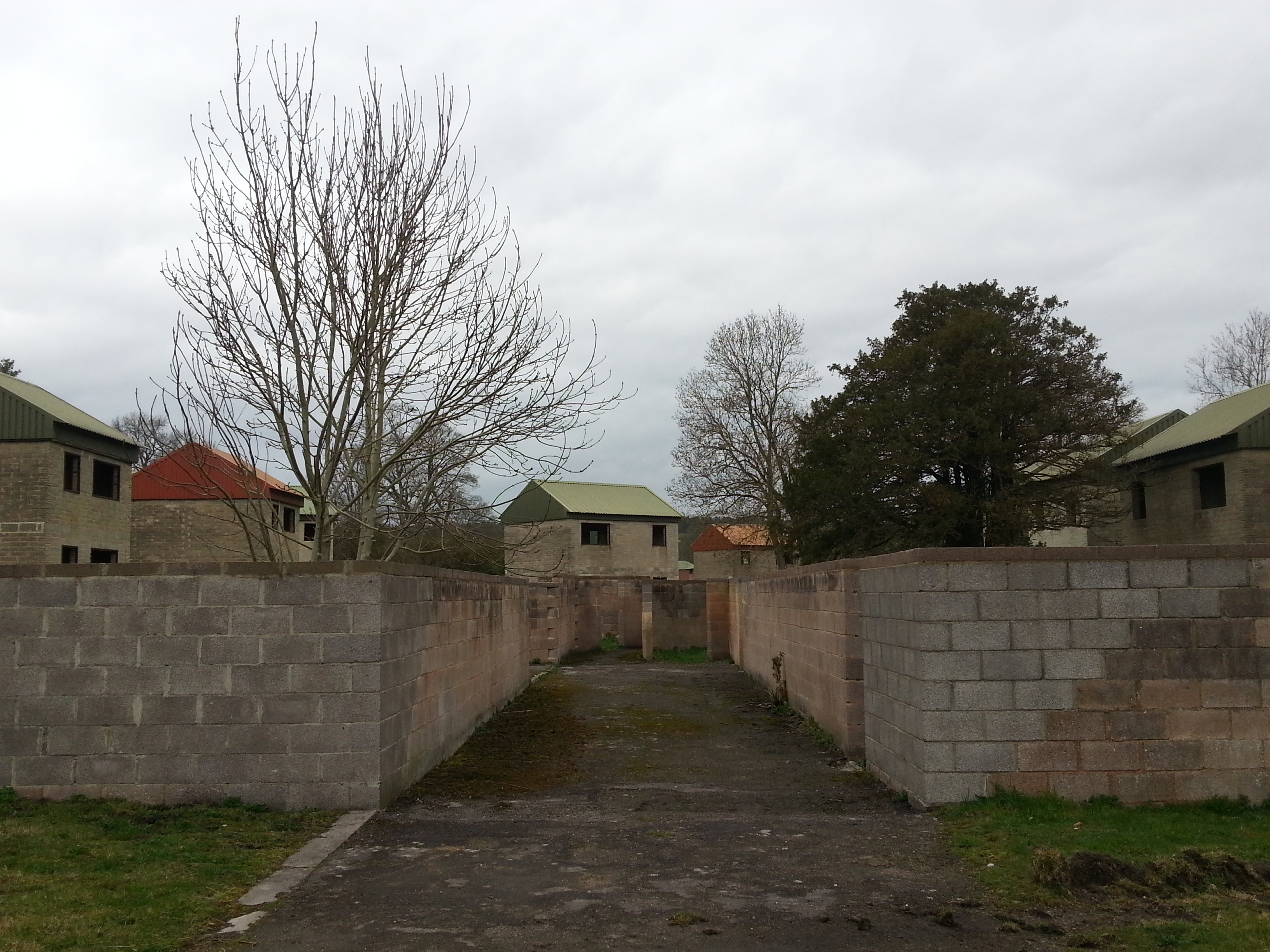
But it has been some 70 years since these buildings played host to the comings and goings of daily life, indeed most of them never have at all. The village of Imber was evacuated in 1943, not for the safety of its residents but to provide the Army with somewhere to practice urban warfare ahead of the invasion of Nazi occupied France, and it has remained a training ground ever since.

20150404_113036

But for a few days a year, including Easter weekend, the barriers are lifted and the public are allowed to return to wander around what is left of this once-thriving village. Residents were given just 47 days notice to leave, recieving the news via a wonderfully understated letter from the War Office which read: ‘I regret to have to inform you that it is necessary to evacuate the major part of the Department’s Imber Estate, including your dwelling.’ The letter, an example of which is on display in the village church, is all very British, politely but firmly outlining the situation and ending with an offer to pay for any produce in the garden which cannot be harvested in time.

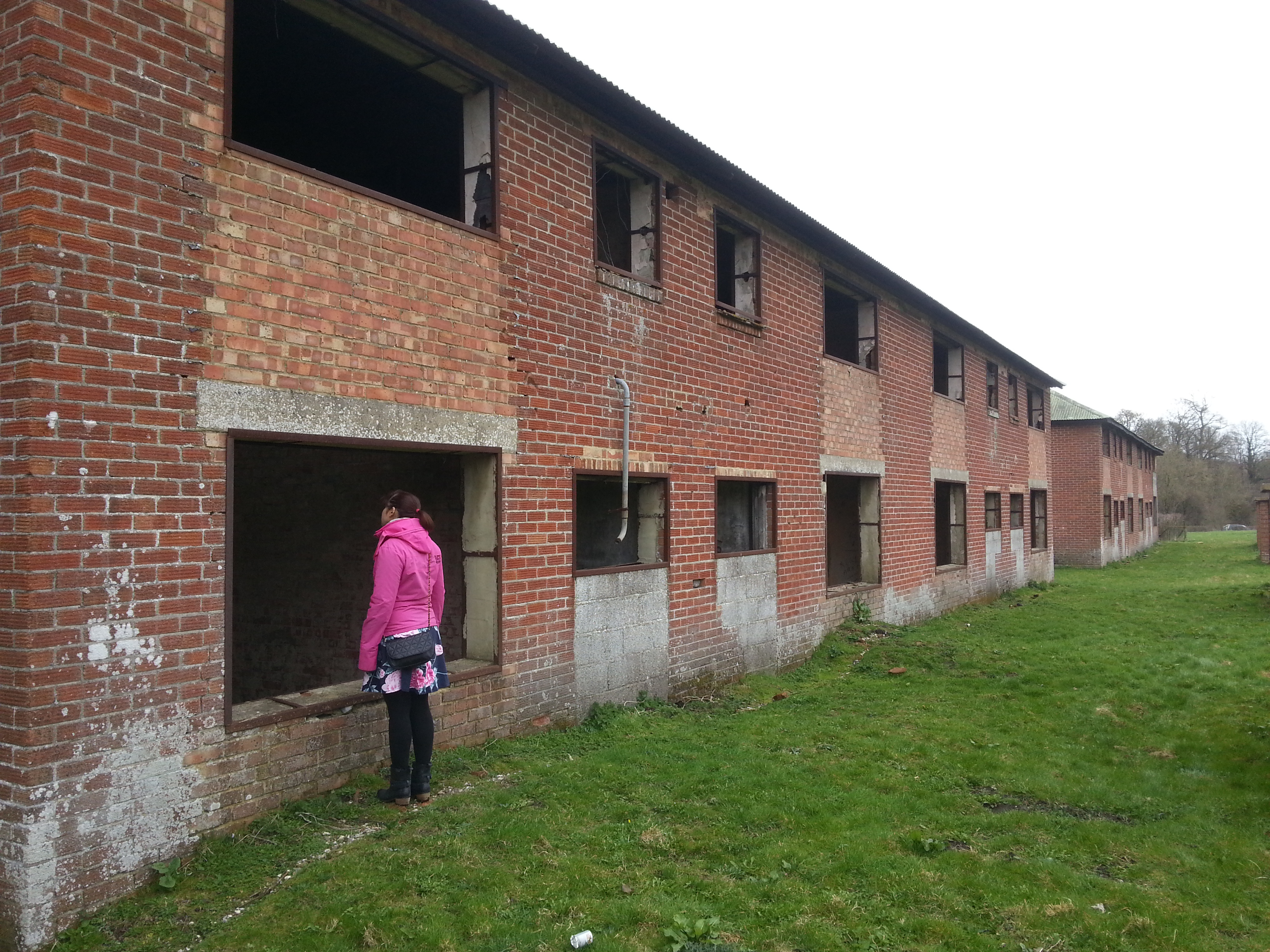
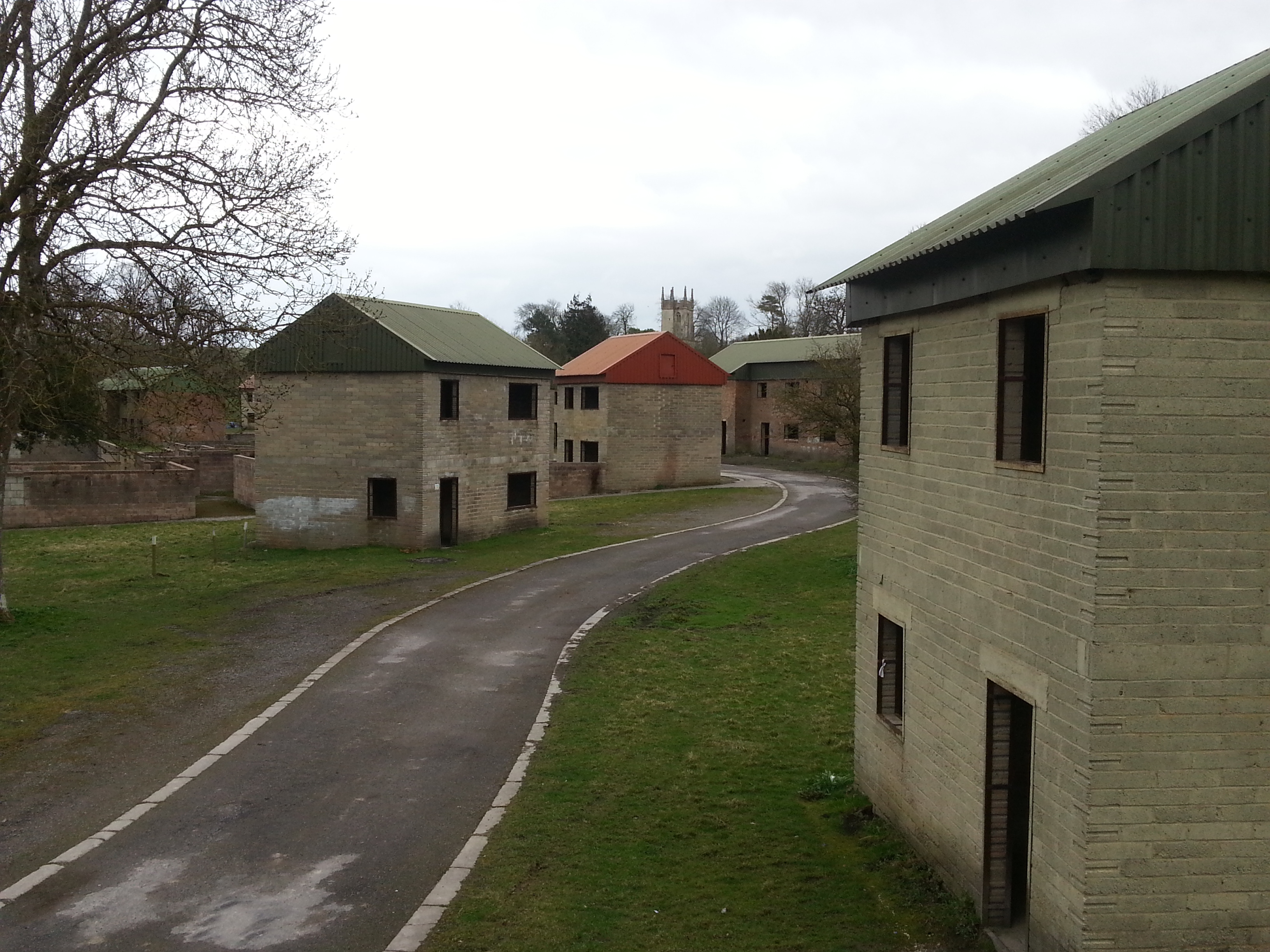
Today there isn’t much those evictees would remember. A map, also part of the church display, illustrates just how few of the original buildings remain, the bulk of them replaced by artless, uniform constructions made of breezeblocks for training purposes. Our visit began between two such residential sections, leaving a layby through a gap in the hedge and walking through a field up behind some houses to the main ‘street’. Had we appraoched from the road we’d have seen that the public were not supposed to venture this far, but in truth there was no real reason why people shouldn’t. Bypassing the rulebook in this way allowed us to enter some of the houses and poke around, and the experience was richer for it. Don’t expect to see much inside, but it does offer some insight into military training techniques.

20150404_11463820150404_115239

Walking down the middle of this residential road is perhaps the eeriest part of the day. Call of Duty veterans might sense something Prypiat-like in the empty streets, perhaps exacerbated by the featureless, functional architecture feeling distinctly ‘Soviet’. Even the Bustette, a gamer by no one’s definition, said it made her feel like she was inside the Playstation. But let’s not get too ahead of ourselves, those expecting the untouched remains of a genuine ‘ghost town’ will be disappointed. There are no swimming pools or crumbling ferris wheels, life and its symptoms have long since been extinguished. Imber’s houses are a collection of shells and little more, to understand that beforehand will allow you find interest in what remains, to expect anything more spectacular will likely leave you disappointed.

20150404_115821

To learn more about what we were seeing, we made the church our next stop. This is both the hub of any visit and the only part of the village still in any way active, opening up for Easter and Rememberance services each year. The displays inside are informative, if slightly too focussed on the church itself at the expense of the village as a whole, and you will also find stalls selling tea and biscuits to set you up for the day.

20150404_113950(0)20150404_120316

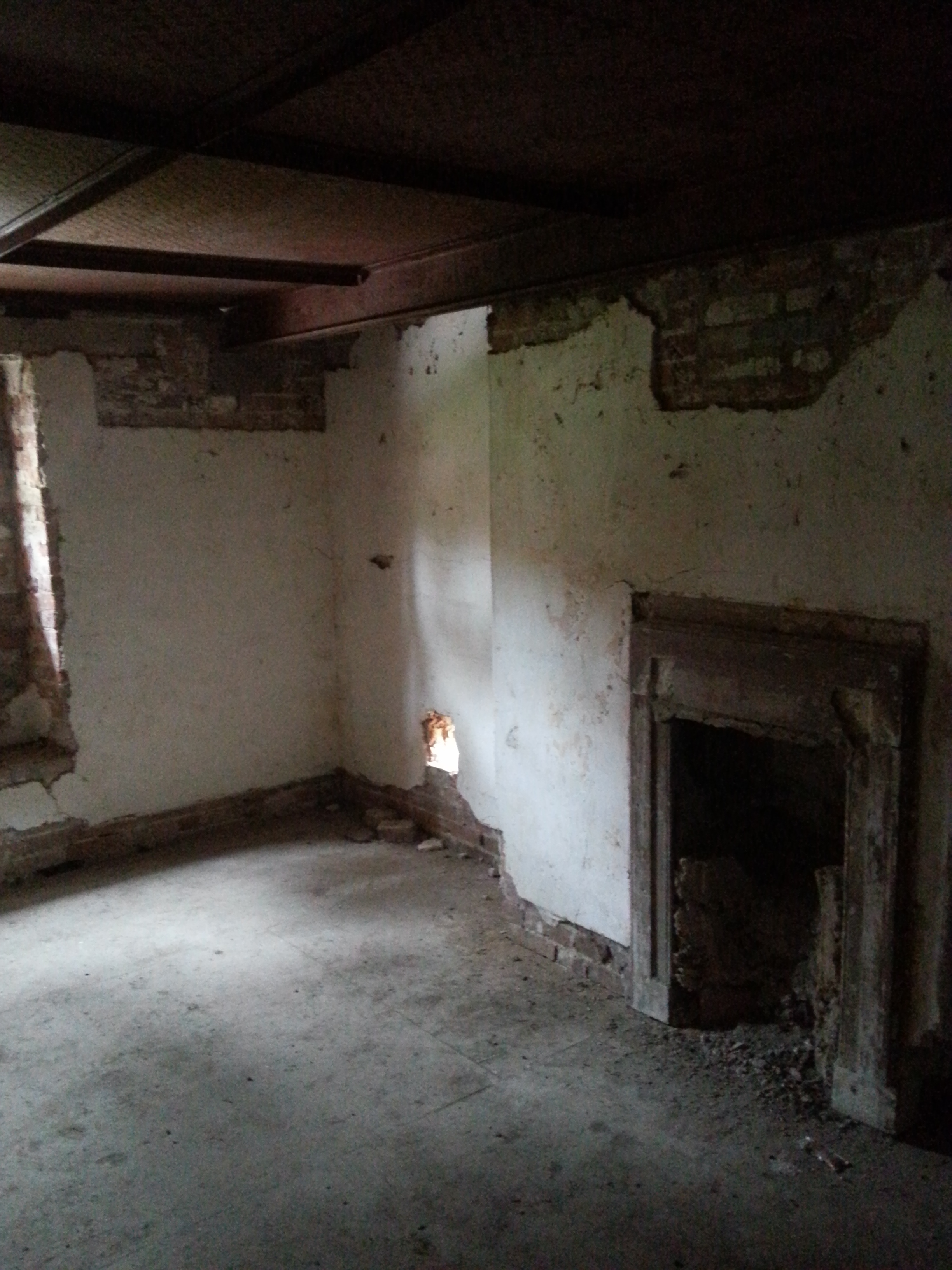
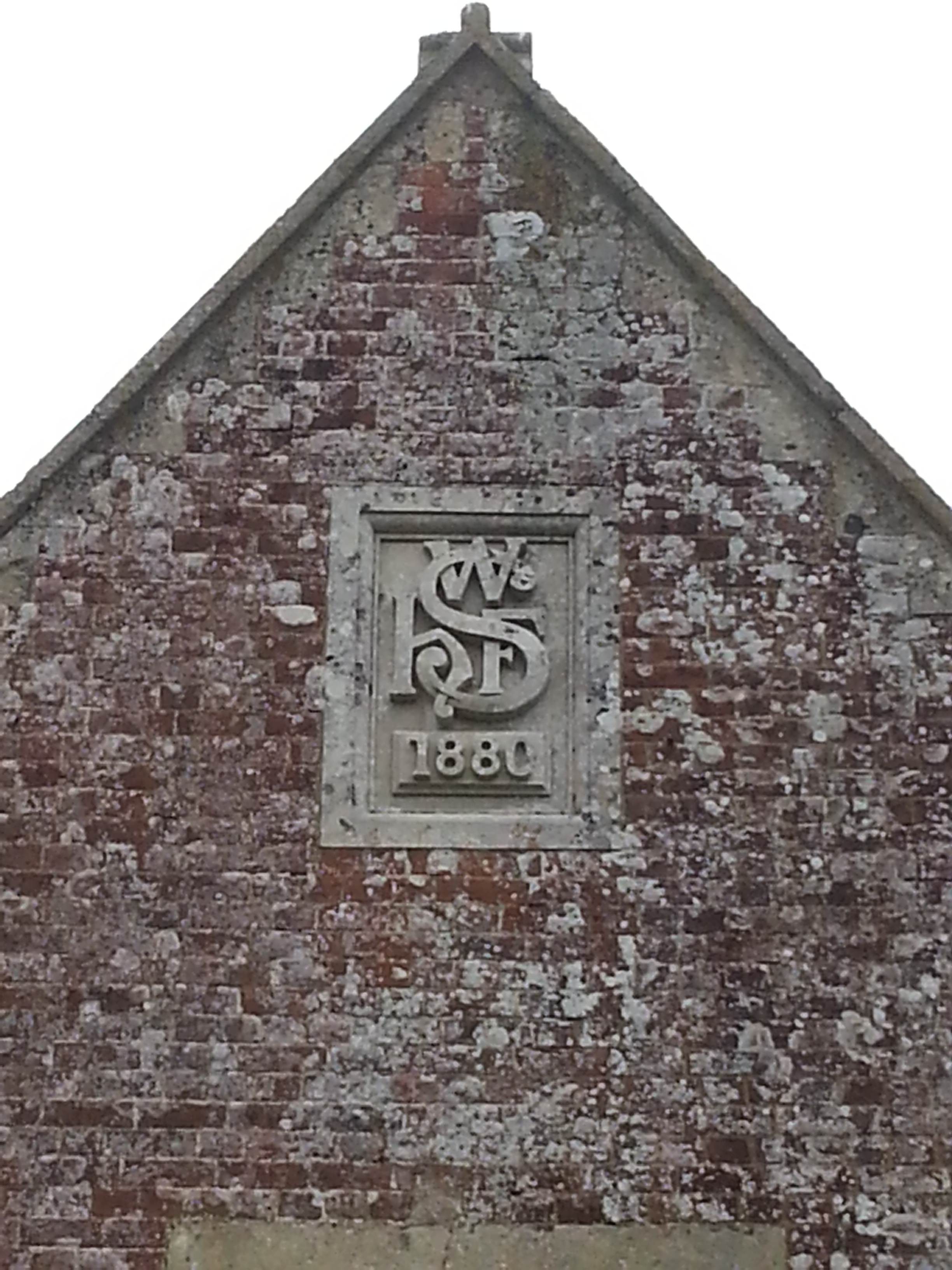
After steeling yourself with knowledge and refreshments, there are a few older, original buildings to explore, each one completely gutted but still offering occasional clues that once they were busy, active homes and businesses. The building date on the side of the farmhouse, for example, and a fireplace in a bedroom of the old inn. Small things, but salient reminders that people once played out their lives here.The inn is particularly worth exploring, with various nooks and crannies spread over three floors, even if, like most of the buildings, it has been adorned with its fair share of graffiti.

And really that’s all Imber is, just a few totally empty buildings to sneak around. Plenty of excitable children enjoyed charging through but it should always be remembered that this is only a very occasional tourist attraction. The set up is unapologetically geared towards its day job rather than to proivde visitors with things to do, but I say all this to temper expectations rather than put people off.

Imber isn’t really the ghost town that the invited press make out it to be, but that doesn’t mean it isn’t worth visiting. The remnants of its past are few and far between but they are there and they combine with the newer structures to offer something slightly haunting about the atmosphere. Perhaps it’s not the most spectacular but on the rare days when the doors are opened it is an essential for those interested in either recent history or today’s military.

Cost: Free

– Parking is available in the village either on the main road or in a layby. Arrive early as the crowds will pick up sharply from mid day.

– Be wary of using technology to get there. Google Maps took us to an old barracks on top of a hill a couple of miles away. The village church website offers good directions.

Up on the Downs

With the sun casting only sporadic warmth through the greying clouds, this particular Sunday morning is typical of this particular August week. The drop in temperature and the dark skies have produced an autumnal feeling that is a long way from the high summer suggested by the calendar, but none of that deters a steady flow of people from marching across the historic Marlborough Downs.

We steal the final remaining space in the car park, just off the main road that traverses the hills from the village of Alton Barnes towards Marlborough, and leave on foot through the sheep fields on the other side of the road towards Walkers Hill. We are by no means alone and those seeking solitude are best advised not to come here on a weekend, but if you don’t mind exchanging regular hellos with fellow hikers then the company adds a certain charm. 

While all the land on the hills is used by farmers for their livestock, there are fairly well established routes that are easy to follow and do not place any demands for huge levels of fitness. The little effort that is required, though, is well worth it. The true magic of the Downs, in my opinion, always lies in the contrast between the ‘inner’ part of the hills, where rising grass in all directions makes you feel enclosed, like you are in the middle of an enormous bowl, and the ‘outer’ slopes.

After just a few minutes’ walk, this contrast is strikes in all its glory. After passing through a couple of gates, the crest of the hill is now before us and each step of the approach reveals more of the breathtaking surroundings below. Suddenly that large bowl has gone and the Vale of Pewsey opens up beneath us, spreading out for miles into the distance. A number of villages dot the landscape, interspersing the endless fields of varying shades and colours before the hills of Salisbury Plain roll forth at the far side a few miles away. A late summer haze, caused by dust from the harvest, does nothing to dampen the impact of this sudden world presenting itself.
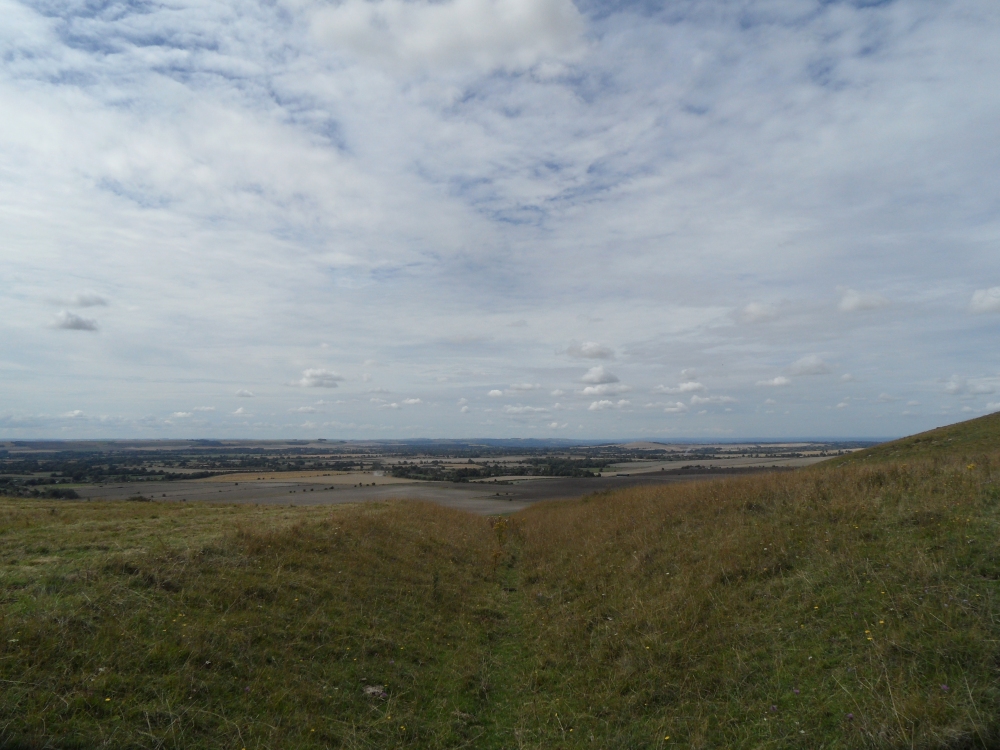
Looking along one of the Adam's Grave ditches on Walker's Hill, revealing the Vale of Pewsey below.

Looking along one of the Adam’s Grave ditches on Walker’s Hill, revealing the Vale of Pewsey below.

Drinking in the view, we decide to follow the path along the southern ridge, this time populated by cows rather than the sheep which had occupied the other side. The contours rise once more, the path now taking us through gorse bushes, before curling round northwards. This curve reveals the face of Milk Hill and the white chalk horse it proudly boasts to all down in the Vale below.
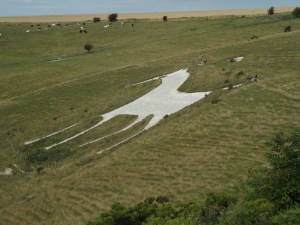
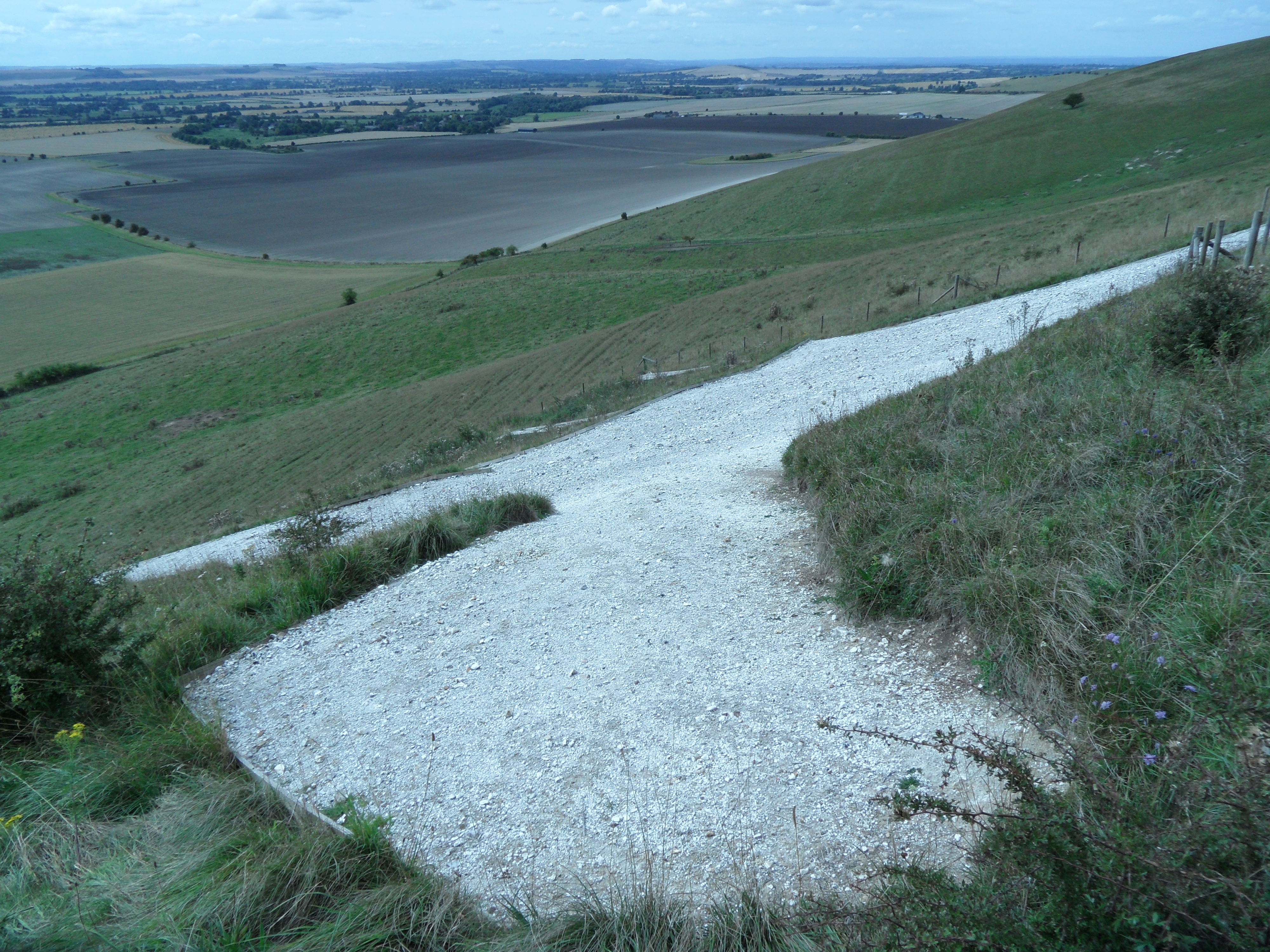
The Alton Barnes White Horse on the face of Milk Hill.

The Alton Barnes White Horse on the face of Milk Hill.

White horses on hillsides are one of Wiltshire’s claims to fame, with 13 of the 24 known to have been built in the country appearing here. Exactly why people have historically been drawn to doing this is not really clear and this particular one seems to be no more than a product of the nineteenth century landowner’s whim. Commissioned by Robert Pile in 1812, it now brings many visitors to the area and, at 160 feet by 166 feet, is a reference point visible throughout the Vale.

A family passes us by, desperately trying to coerce their dog into following obediently, with young children demonstrating the comfort levels of this walk. We make our way round towards the horse, which itself is fenced off but the path almost guides us along its back. Up close the details become clearer, from the pointed ears to the patch of grass which forms its eye, making it clear this is much more a work of art than a hastily cobbled together bit of fun.
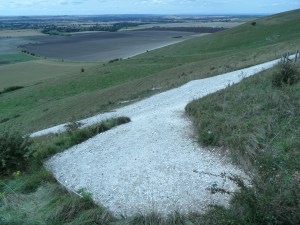
The tail of the White Horse, looking south-west towards the villages of Stanton St Bernard and All Cannings.

The tail of the White Horse, looking south-west towards the villages of Stanton St Bernard and All Cannings.

Beyond the horse, most walkers tend to carry on along the Downs towards Devizes, but I fancy something different and guide us ‘off-piste’, trekking our way back up towards the summit. As well as boasting the white horse, Milk Hill is also the second highest point between Bristol and London and the views it offers are well worth the climb. From the right spots it is possible to have the Vale on one side while being able to see Silbury Hill and Avebury on the other. 

The north side of the hill drops us back down into the great grass bowl of the inner slopes and we skirt around the edge of a few sheep fields, something I won’t entirely recommend but not really a problem if you don’t do too much to disturb the livestock. It is also a more taxing walk and you will end up having to hop over some barbed wire fences as there are no gates to ease your thoroughfare. Circling back round towards our starting point, we want to return to Walkers Hill where what appears to be a small mound sits like a nipple on the peak.

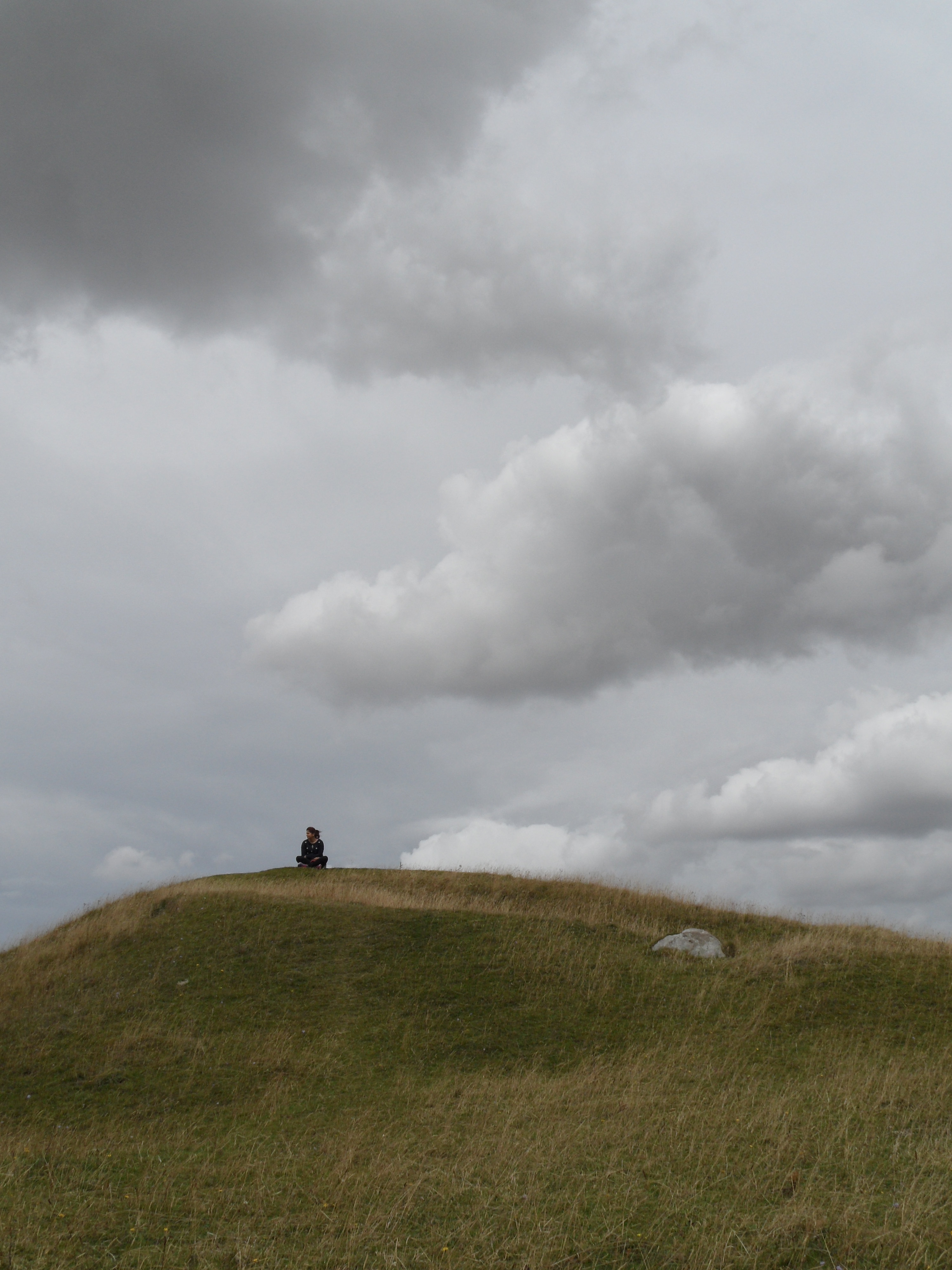
The very deliberate-looking ditches around the mound- which I used to sledge down with friends in the snow when I was young- hint that there is more going on than first appears obvious and, although there is no information on any nearby signs to explain, the ‘nipple’ is actually another of Wiltshire’s many neolithic burial mounds, known as Adam’s Grave. Its history is vague, although some reports suggest that a nineteenth century excavation discovered three partial skeletons inside and, to excite the children, a couple of bloody Anglo-Saxon battles were fought here in the 6th and 8th centuries when it was known as Woden’s Burg. Any sort of discernible structure is now long gone but enough remains to pique the interest of those who study these kinds of things. For those who don’t it is still highly recommended as the finest viewing spot of all.
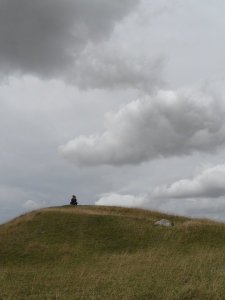
Sitting on top of 'Adam's Grave'. Visible is a large stone that likely formed part of the original structure.

Sitting on top of ‘Adam’s Grave’. Visible is a large stone that likely formed part of the original structure.

We spend a good ten minutes sitting on the very peak here, marvelling at the 360 degree vista. Upon taking the time to really pause, the silence becomes striking and it is by a distance the most serene point of the walk. The only disturbance comes from a gentle breeze; all other walkers might as well be a hundred miles away instead of a few hundred metres and the roads and villages visible below seem to be in another world, all activity playing out silently on a stage that we have no place on.

It is at this point that the famous British summer time begins to catch up with us. With the sky now getting ever more grey we rouse ourselves from our reverie and make a retreat to the car. Regardless of the imperfect weather, though, it had been a beautiful way to spend a weekend morning and, of particular importance on this autumnal feeling day, the ideal prelude to a Sunday roast.
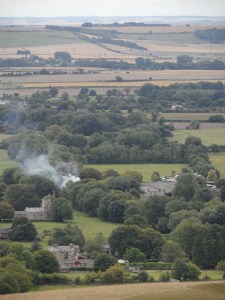
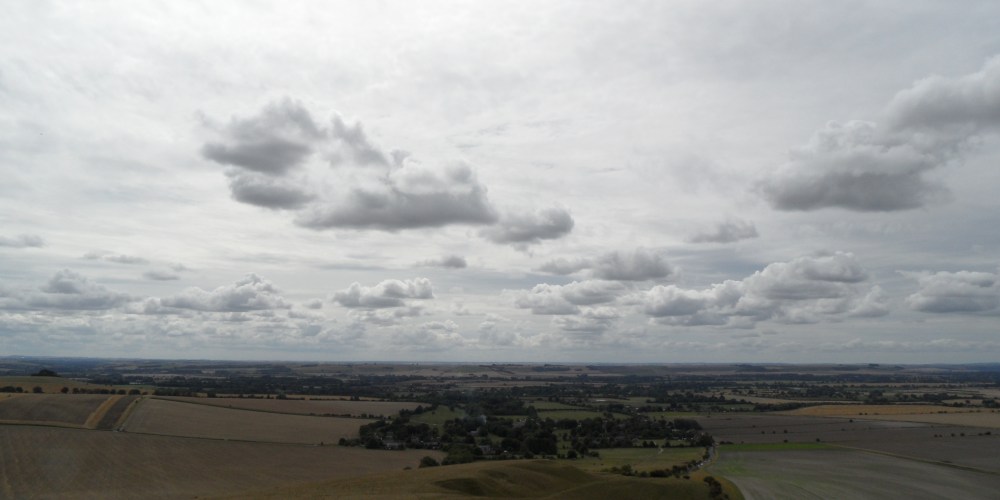
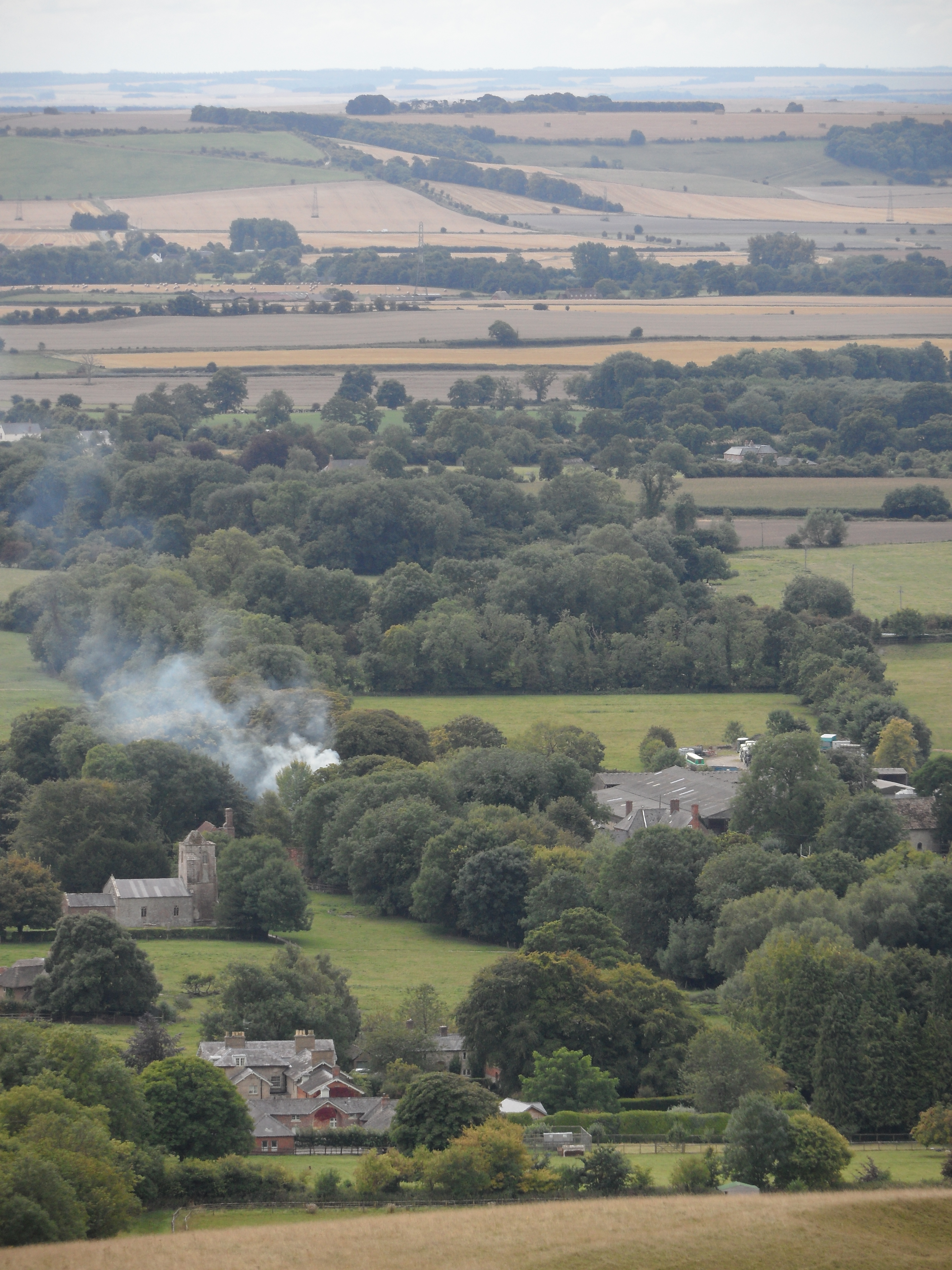
Alton Priors and beyond, seen from the top of Walkers Hill.
Alton Priors and beyond, seen from the top of Walkers Hill.