Perhaps it was the whirling, twirling and blaring of the Marlborough Mop in the High Street outside that put such ideas into my head, but the wonky staircase felt almost like it belonged to a ‘Haunted House’ fairground attraction. The oak creaked loudly underfoot, the walls bent inwards under their own weight, the floors were uneven and wavy. All in all it almost presented a caricature of a seventeenth century house, the sort of place a 10 year old might conjure up if tasked with finding a home for an Elizabethan ghost.
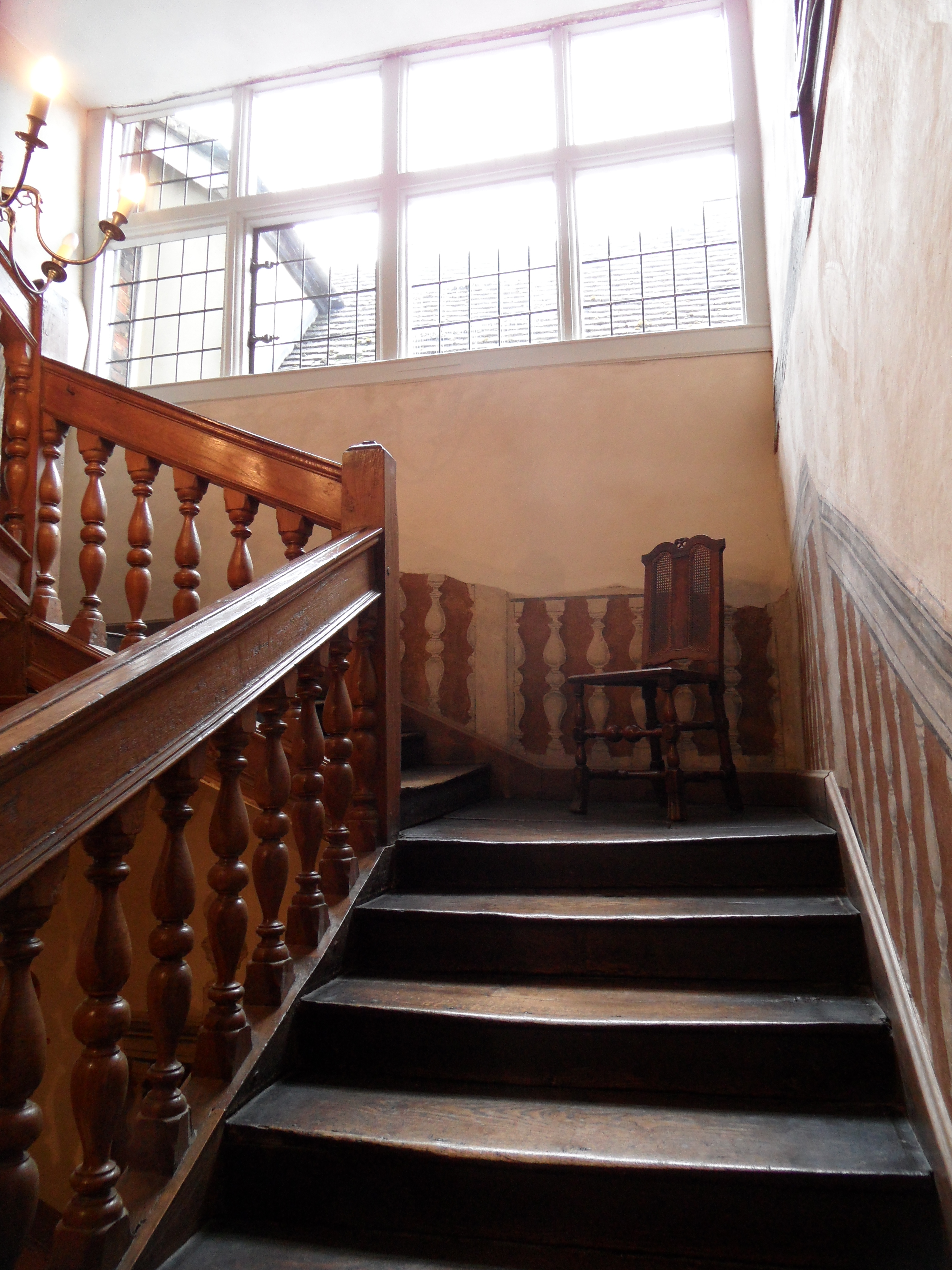
But the Merchant House is far from a circus ride; rather, it is a remarkable piece of history, a living museum filled with fascinating pieces but where the main attraction is the building itself. To understand the House properly we should begin, as the tour does, with a brief overview of its past. In what seems something of a recurring theme of the era, a ‘Great Fire’ swept through Marlborough in 1653, decimating the High Street and much of the surrounding area. Oliver Cromwell, in an act of sympathy for a town that had loyally supported him during the Civil War, ordered a national collection in all parishes to remunerate its people. The second largest individual settlement from this generous pot was granted to Thomas Bayly, a silk merchant, who used it to build himself and his family this particularly fine home.
While the grand estates of the aristocracy and the wattle and daub huts of the poor have all been relatively well represented in TV and film, the homes and lifestyles of the nascent middle classes are lost to us in comparison. It is this rarity which makes the Merchant House and its ongoing restoration such a worthwhile endeavour, particularly as so many of its original features remain in tact.
Entrance is only allowed as part of a guided tour, days and times for which are available on their website, which is taken under the steering hand of one of their experienced and knowledgeable volunteers. Ours was the late Saturday afternoon shift and we were joined only by one other couple, a well-meaning but fairly dour pair upon whom almost all of our guide’s enthusiasm seemed to break imperviously like waves on a beach, but the interest never dimmed as a result.
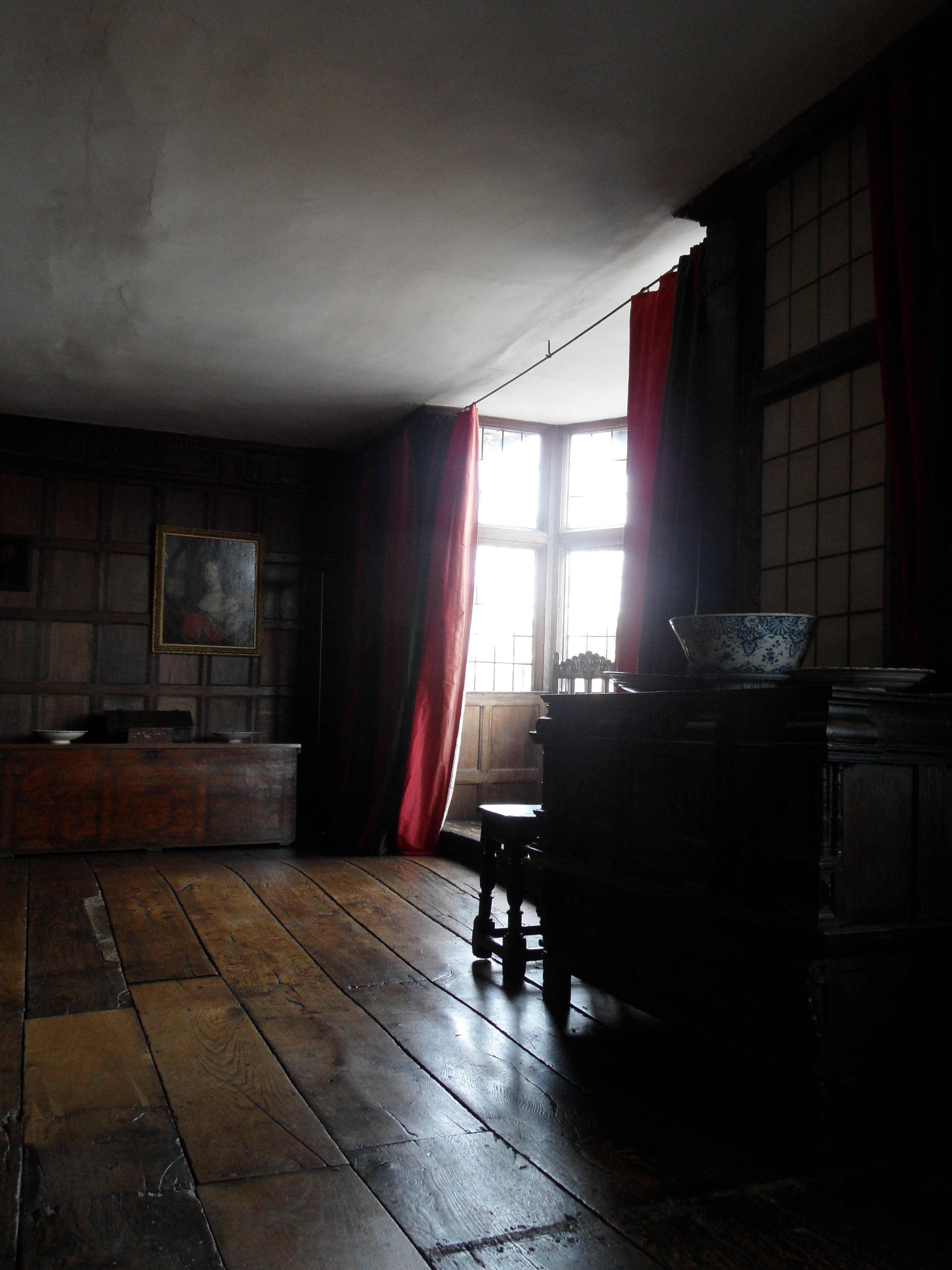
We began in the first floor chamber at the front of the building. Entirely panelled in original oak, this remarkable room has the feel, and indeed the smell, of an old ship. To suddenly find yourself here you could be forgiven for assuming you were aboard the Victory rather than inside a Marlborough townhouse. The room has fallen victim to the settling of the building over the centuries, giving rise to a large ‘wave’ across the floor where the oak boards have draped themselves over a wall on the floor below, while the original stone fireplace has also cracked in a few places. If anything, though, this only serves to add to its authenticity and charm.
Inside the chamber, as with all the rooms, are a number of artifacts from around the time it was built, although of all these only a solitary earthenware wine jug in the kitchen actually belonged to the house. In one corner sits a chest into which somebody has rather charmingly etched the abridged version of their life story, complete with a spelling mistake that has seen them carve a line through the errant letter and write the correct one above. In the window sits an original stained glass panel of a sundial with the Latin quip, ‘Dum spectas fugio’- ‘While you look, I fly’; a rather poignant comment about fleetingness of time- painted onto it. The addition of a painted housefly rounds off this seventeenth century japery.
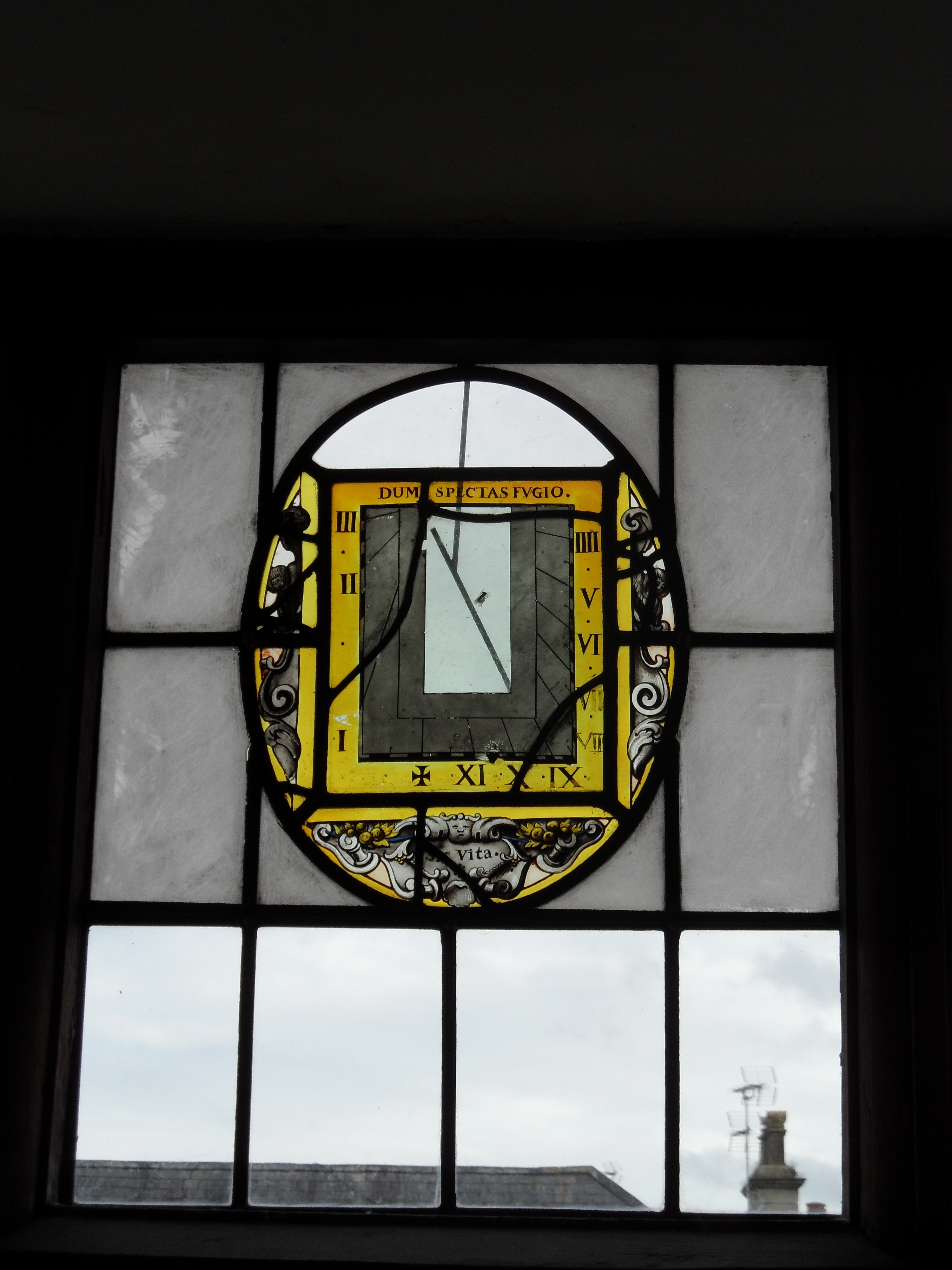
‘While you look, I fly’
The tour continued upstairs to a small room which the curators suspect to have been a study. Beyond the very faint remains of what seems to have been a crest painted above the fireplace, the room itself is fairly unremarkable. On a desk inside it, though, lay what I found to be the most exciting exhibit of the entire tour: an original copy of Foxe’s Book of Martyrs, loaned to the House on the condition that it remain open to be read and touched rather than stuffed behind glass. I could picture the joy my A-Level history teacher would have taken in seeing this, one of the great early masterpieces of propaganda detailing the suffering of Protestant heroes at the hands of wicked Catholics. Even ignoring the content, the physical book itself was incredible: the invention of the printing press stands chronologically between the development of written language and the advent of the internet as one of humanity’s great leaps forward in information sharing, and here was something that rolled off one of those first primitive presses, laid out for visitors to touch and turn its pages.
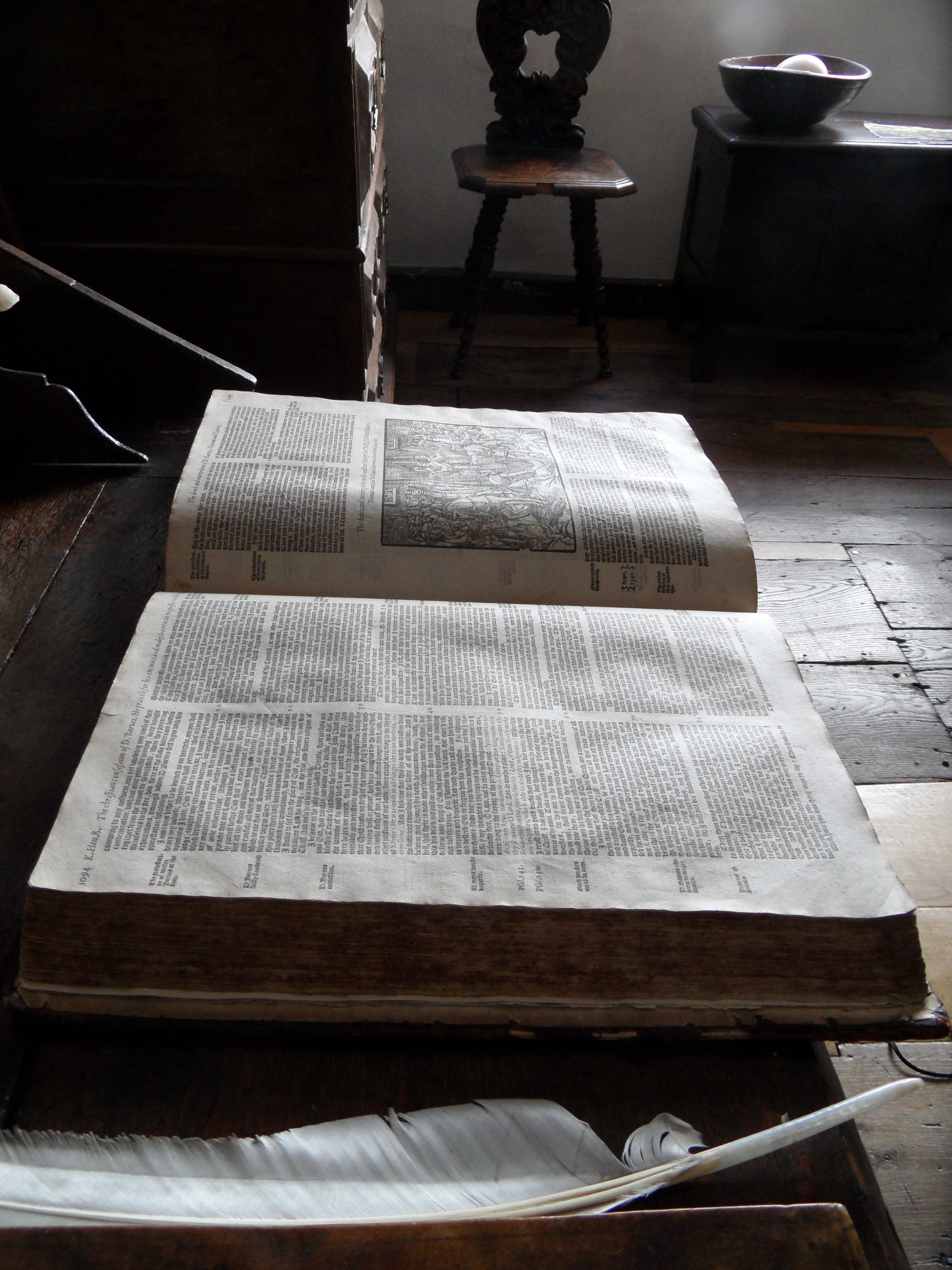
Foxe’s Book of Martyrs, an original edition, sits on a desk in the study.
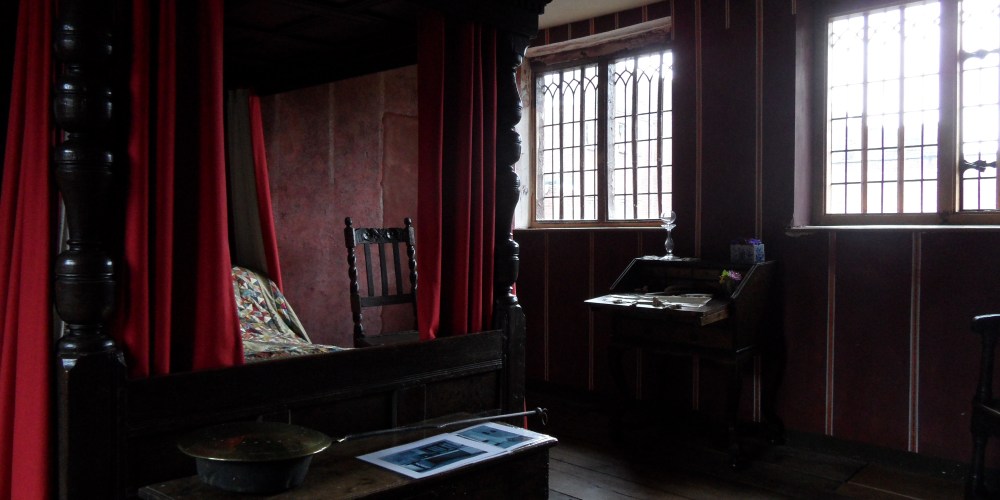
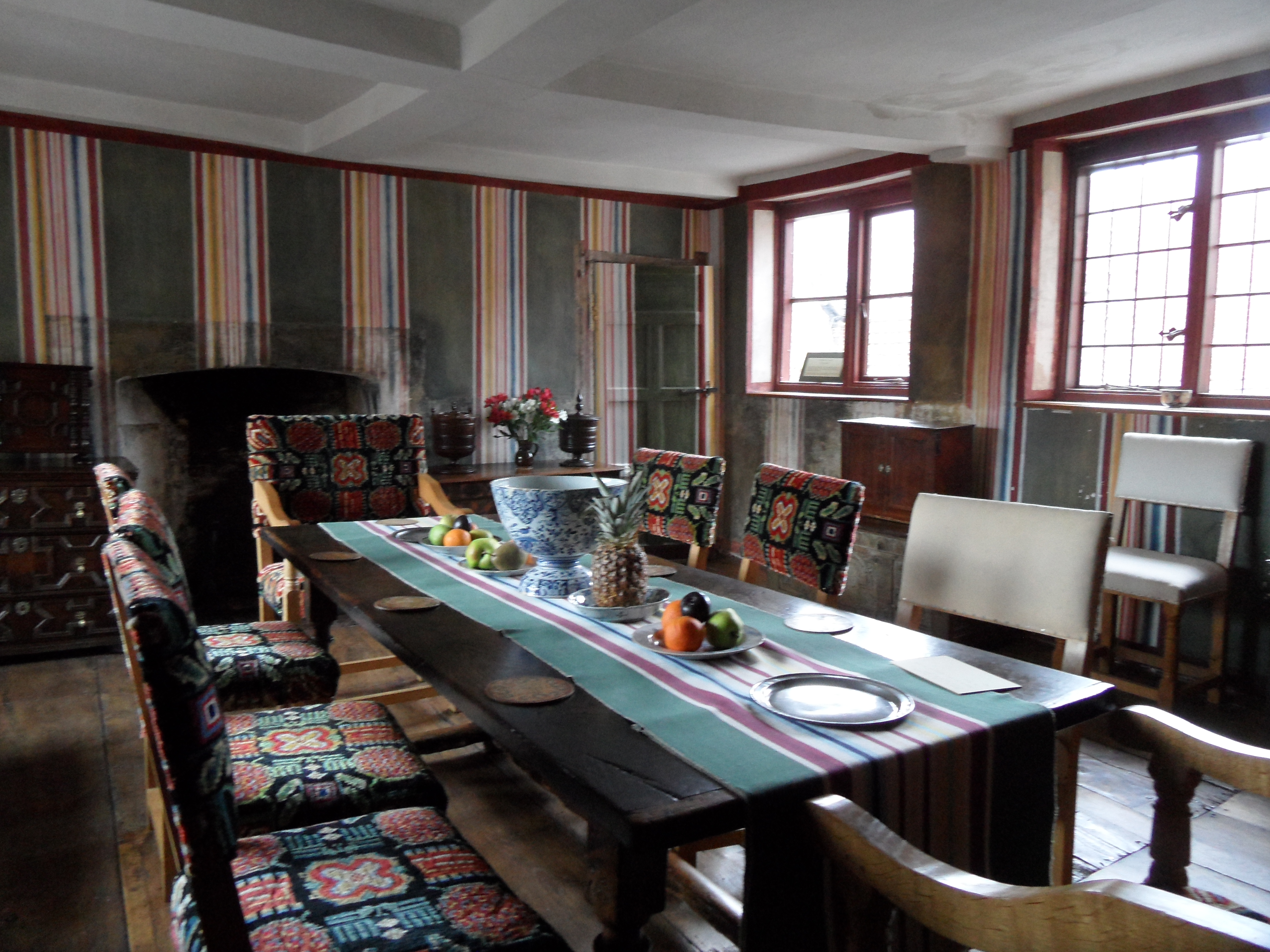
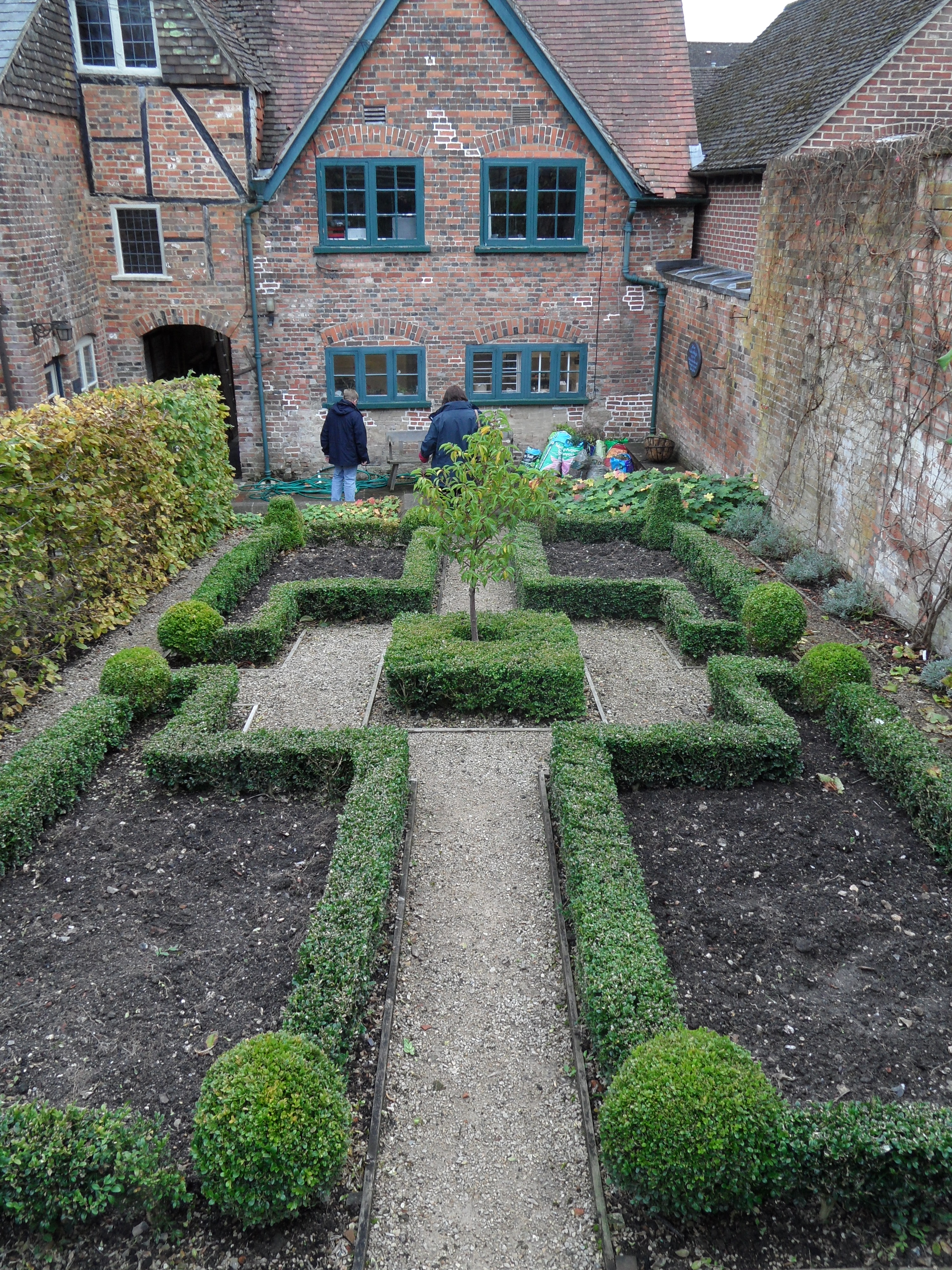
Further into the house, we were taken through a couple of bedrooms and the newly-restored kitchen before finishing in the dining room. Far be it from me to explain every single detail and every story the house has to tell, for that you should take a tour yourself, but there are further causes for fascination. The master bedroom and the dining room are decorated in exactly the way Bayly himself had them, restored after analysing the surviving sections of authentic paintwork. Interestingly, someone recently noticed a painting in the Netherlands which clearly depicts the room Bayly must have visited to receive his inspiration for the dining room decor. At the end we were shown to the small garden and left to wander around it at our own discretion, the different sections providing something for the horticulturalists but not really having the same impact as the house itself.
It goes without saying that those with no interest in history whatsoever will gain little from a trip to the Merchant House. For everyone else, though, there is certainly something to enjoy and you don’t need to be an aficionado in order to do so. Whether you are struck by one of the exhibits or simply enjoy the building itself, the modest entrance fee is well worth paying, especially considering you will receive the wisdom of a guide throughout. Speaking of which, I can only admire and applaud the incredible amount of time and work that everybody involved in the project volunteers in order to restore the house and share its story with the wider public. It might be hidden away, relatively unnoticed on the busy modern High Street, but the fruit of their dedication gives the Merchant House a sparkle, and Marlborough is all the richer for it.
Cost: £6 per person
* * *


 That Cluckin' Bustard